Announcing Agent Commander - The First Integrated solution from Veeam + Securiti.ai enabling the scaling of safe AI agents

View

Data Discovery for Securing Sensitive Data on the Cloud

Published September 24, 2021 / Updated May 10, 2024
Author

Omer Imran Malik

Data Privacy Legal Manager, Securiti

FIP, CIPT, CIPM, CIPP/US

Listen to the content

Data is moving to the cloud, creating a new challenge for organizations to protect their consumers’ data stored. The first step to securing sensitive data in the cloud is sensitive data discovery. This article describes the types of cloud data migration and their advantages, security & privacy risks of cloud data migration, and why deep data discovery is essential to secure all sensitive data.

Types of Cloud Storage

Migrating a data warehouse to the cloud

A data warehouse is a large collection of an entire organization’s data. It stores data from multiple databases and is optimized for aggregation and retrieval of large data sets. Increasingly, organizations are opting to migrate their data warehouse from on-premise machines to the cloud. Migrating to the cloud helps organizations reduce costs, build the ability to scale quickly, improve security controls, and enhance governance capabilities such as user Identity and Access Management (IAM) and analytics.

Migrating a data lake to the cloud

A data lake is a centralized repository that allows organizations to store all their structured and unstructured data at any scale. With a data lake, organizations can store data as-is without having first to structure the data. A data lake can store unstructured data from IoT devices, websites, mobile apps, social media, and corporate applications.

Moving the data lake into the cloud has similar advantages to migrating a data warehouse to the cloud. However, a unique advantage of having the data lake in the cloud is that organizations can run different types of analytics—from dashboards and visualizations to big data processing, real-time analytics, and machine learning to guide better decisions.

File sharing and collaboration to cloud

Cloud collaboration brings several benefits to the organization, which traditional file sharing fails to convey. Besides improved security during data transfer, cloud collaboration can make editing and transferring files easier, offer a real-time response, and improve brainstorming.

Migrating data to the cloud can increase performance, scalability, and cost benefits. While the cloud undoubtedly brings several advantages, migrating data to the cloud requires planning & preparation, keeping in mind all the data privacy requirements.

Many privacy laws like the CCPA and GDPR, have imposed strict data-sharing requirements on organizations. These requirements aim to protect organizations from potential privacy and security risks that might emanate after the cloud migration process is complete and protect consumers’ personal data. Let’s explore some of the major types of risk.

Privacy Risks

According to market estimates, the global cloud computing market is set to grow at a CAGR of 18%, making its value USD 623.3 billion by 2023. Most major privacy regulations have specific guidelines on data sharing as well as cross-border data transfers. For instance, organizations are required to assess the security posture of a third-party vendor before transferring any personal data and leverage contractual agreements to protect transferred personal data.

Security Risks

Transferring data from legacy infrastructure to cloud storage can come with a myriad of security concerns. These concerns can range from insider threats where the authorization of access is abused to accidental errors from employees, external attacks in the form of malware, misconfiguration within servers, and problems on the cloud provider’s side. Any of these can lead to compliance breaches which can result in heavy fines and penalties. A recent case study by IBM X-Force IRIS showed that cloud-based applications are severely prone to cyber-attacks and cybercriminals exploit cloud applications more than any other platform. Another study by IBM showed that 21% of data stored in cloud storage is sensitive data of the consumer, which can be detrimental in case of a breach in the system.

Consequences of not mitigating Cloud Storage Security & Privacy Risks

Lax security controls make organizations vulnerable to data breaches. Data breaches can severely damage an organization’s reputation, decimate customer trust, and expose them to severe legal penalties from regulators. In some jurisdictions, impacted individuals can file civil lawsuits against the organization as well.

Why Deep Data Discovery is essential

During the deep data discovery exercise, the organization needs to make sure that specific steps are performed. A good data discovery solution should help you:

  • Detects shadow & native data assets across major cloud service providers and extract them into an asset catalog.
  • Classify sensitive data elements in multi-cloud and self-managed structured and unstructured data systems.
  • Visualize the distribution of sensitive data elements.
  • Synchronize with any third-party data catalogs to populate metadata.
  • Build a relationship map between discovered personal data and its owners.
  • Enable timely fulfillment of DSRs, breach notifications, and consent report.
  • Detect security posture and misconfigurations.
  • Assess data security risks.
  • Identify data risk hotspots in your environment.
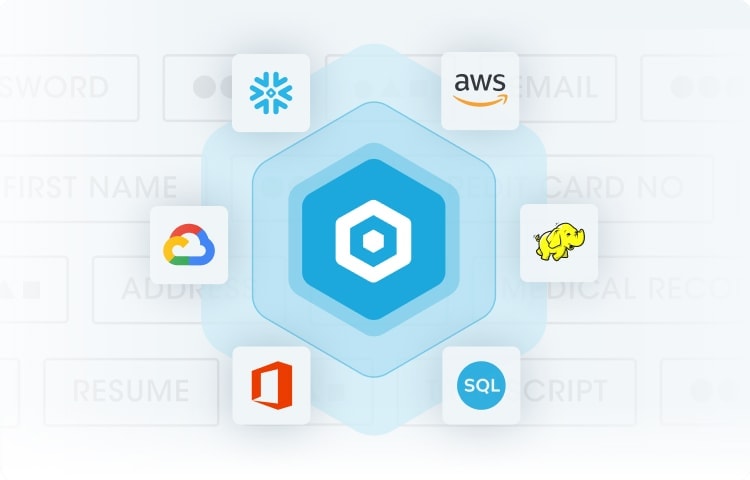
Efficiently discover and classify sensitive data with DSPM, an integrated solution within Securiti Data Command Center. Gain a better understanding of your data to meet all your security, privacy, governance, and compliance obligations.

Learn More

Next Steps

Securiti provides an AI-powered Sensitive Data Intelligence (SDI) solution to help organizations protect data in multi-cloud. Securiti’s SDI delivers all the core features to discover, classify, catalog, analyze and protect sensitive data across all cloud data assets, including all structured and unstructured data systems while ensuring security & compliance are always up to date.

While Securiti’s SDI provides visibility into sensitive data across various data systems, it offers many more features and modules to help organizations fulfill their privacy and security functions. For data privacy, it provides: Data Mapping, Data Subject Rights (DSRs), Privacy Assessments, Third-Party Assessments, and Consent. For data security, it includes data risk, protection, investigation, and access control features to help mitigate the risk of data breaches. All of these functionalities are supported by policy and workflow engines that help automate these functions.
To learn how you can recruit automation and artificial intelligence to help you safely migrate to cloud storage, click here to download our whitepaper.


Frequently Asked Questions (FAQs)

Cloud data discovery refers to the process of identifying, locating, and managing data stored in cloud environments. It involves using tools and techniques to uncover and understand data assets within cloud services and storage solutions.

The benefits of cloud data discovery include improved data visibility, enhanced data security, better compliance management, efficient data governance, cost optimization, and the ability to leverage cloud data for analytics and decision-making.

Cloud investigation looks into data and activity in cloud systems to uncover security issues, breaches, or unauthorized access while ensuring rules are followed.

Analyze this article with AI

Prompts open in third-party AI tools.
Join Our Newsletter

Get all the latest information, law updates and more delivered to your inbox


Share

More Stories that May Interest You
Videos
View More
Rehan Jalil, Veeam on Agent Commander : theCUBE + NYSE Wired: Cyber Security Leaders
Following Veeam’s acquisition of Securiti, the launch of Agent Commander marks an important step toward helping enterprises adopt AI agents with greater confidence. In...
View More
Mitigating OWASP Top 10 for LLM Applications 2025
Generative AI (GenAI) has transformed how enterprises operate, scale, and grow. There’s an AI application for every purpose, from increasing employee productivity to streamlining...
View More
Top 6 DSPM Use Cases
With the advent of Generative AI (GenAI), data has become more dynamic. New data is generated faster than ever, transmitted to various systems, applications,...
View More
Colorado Privacy Act (CPA)
What is the Colorado Privacy Act? The CPA is a comprehensive privacy law signed on July 7, 2021. It established new standards for personal...
View More
Securiti for Copilot in SaaS
Accelerate Copilot Adoption Securely & Confidently Organizations are eager to adopt Microsoft 365 Copilot for increased productivity and efficiency. However, security concerns like data...
View More
Top 10 Considerations for Safely Using Unstructured Data with GenAI
A staggering 90% of an organization's data is unstructured. This data is rapidly being used to fuel GenAI applications like chatbots and AI search....
View More
Gencore AI: Building Safe, Enterprise-grade AI Systems in Minutes
As enterprises adopt generative AI, data and AI teams face numerous hurdles: securely connecting unstructured and structured data sources, maintaining proper controls and governance,...
View More
Navigating CPRA: Key Insights for Businesses
What is CPRA? The California Privacy Rights Act (CPRA) is California's state legislation aimed at protecting residents' digital privacy. It became effective on January...
View More
Navigating the Shift: Transitioning to PCI DSS v4.0
What is PCI DSS? PCI DSS (Payment Card Industry Data Security Standard) is a set of security standards to ensure safe processing, storage, and...
View More
Securing Data+AI : Playbook for Trust, Risk, and Security Management (TRiSM)
AI's growing security risks have 48% of global CISOs alarmed. Join this keynote to learn about a practical playbook for enabling AI Trust, Risk,...

Spotlight Talks

Spotlight 50:52
From Data to Deployment: Safeguarding Enterprise AI with Security and Governance
Watch Now View
Spotlight 11:29
Not Hype — Dye & Durham’s Analytics Head Shows What AI at Work Really Looks Like
Watch Now View
Spotlight 11:18
Rewiring Real Estate Finance — How Walker & Dunlop Is Giving Its $135B Portfolio a Data-First Refresh
Watch Now View
Spotlight 13:38
Accelerating Miracles — How Sanofi is Embedding AI to Significantly Reduce Drug Development Timelines
Sanofi Thumbnail
Watch Now View
Spotlight 10:35
There’s Been a Material Shift in the Data Center of Gravity
Watch Now View
Spotlight 14:21
AI Governance Is Much More than Technology Risk Mitigation
Watch Now View
Spotlight 12:!3
You Can’t Build Pipelines, Warehouses, or AI Platforms Without Business Knowledge
Watch Now View
Spotlight 47:42
Cybersecurity – Where Leaders are Buying, Building, and Partnering
Rehan Jalil
Watch Now View
Spotlight 27:29
Building Safe AI with Databricks and Gencore
Rehan Jalil
Watch Now View
Spotlight 46:02
Building Safe Enterprise AI: A Practical Roadmap
Watch Now View
Latest
View More
Introducing Agent Commander
The promise of AI Agents is staggering— intelligent systems that make decisions, use tools, automate complex workflows act as force multipliers for every knowledge...
Risk Silos: The Biggest AI Problem Boards Aren’t Talking About View More
Risk Silos: The Biggest AI Problem Boards Aren’t Talking About
Boards are tuned in to the AI conversation, but there’s a blind spot many organizations still haven’t named: risk silos. Everyone agrees AI governance...
Largest Fine In CCPA History_ What The Latest CCPA Enforcement Action Teaches Businesses View More
Largest Fine In CCPA History: What The Latest CCPA Enforcement Action Teaches Businesses
Businesses can take some vital lessons from the recent biggest enforcement action in CCPA history. Securiti’s blog covers all the important details to know.
View More
AI & HIPAA: What It Means and How to Automate Compliance
Explore how the Health Insurance Portability and Accountability Act (HIPAA) applies to Artificial Intelligence (AI) in securing Protected Health Information (PHI). Learn how to...
Consent Orchestration for Safe AI View More
Consent Orchestration for Safe AI
Access the whitepaper and learn how to operationalize consent across data and GenAI with a practical framework, enforceable controls, and a 30/60/90-day implementation roadmap.
View More
2026 Privacy Compliance Readiness Checklist
Access the whitepaper to unlock a practical guide to strengthening privacy readiness, featuring key insights, the 2026 privacy compliance checklist, and how to operationalize...
DataAI Security for Retail View More
DataAI Security for Retail
Download the brief and explore how retailers can securely scale Data & AI with Securiti DataAI Command Center and protect sensitive data, manage risk,...
Emerging AI Security Trends For 2026 View More
Emerging AI Security Trends For 2026
Securiti’s latest infographic provides security leaders with a walkthrough of all the emerging AI security trends for 2026 to help them assess and plan...
View More
Take the Data Risk Out of AI
Learn how to prepare enterprise data for safe Gemini Enterprise adoption with upstream governance, sensitive data discovery, and pre-index policy controls.
View More
Navigating HITRUST: A Guide to Certification
Securiti's eBook is a practical guide to HITRUST certification, covering everything from choosing i1 vs r2 and scope systems to managing CAPs & planning...
What's
New