The EU's Artificial Intelligence (AI) Act

Last Updated on May 6, 2026

SHADOW AI Is Your Biggest EU AI Act Compliance Risk

Gain Visibility. Govern AI. Stay Compliant

Get Started

Schedule your demo today

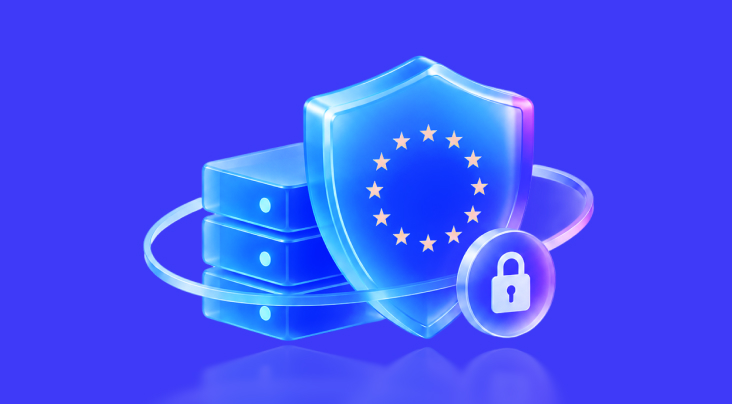
The European Union's Artificial Intelligence Act (EU AI Act) mandates you to take a risk-based approach to the development, deployment, and use of AI systems, ensuring the safe and responsible use of AI throughout its entire lifecycle.

What does this mean for your organization?

Your organizations must now:

  • Identify every AI system (including shadow AI) in their environment.
  • Classify LLMs based on their risk score.
  • Discover and classify sensitive, regulated data flowing through LLMs.
  • Understand and track data, used to train or fine-tune AI models.

Non-compliance means not only regulatory repercussions, which reach up to €35 million or 7% of global annual turnover, but also reputational damage and loss of customer trust.

You Can’t Govern What You Can’t See

Traditional approaches fall short when it comes to governing AI in an ever-evolving environment, posing the biggest challenges for organizations globally.

Organizations don’t know:

  • What AI models exist in their environment.
  • What data they are using to train or fine-tune the models.
  • What data is flowing through the LLMs.
  • Which AI models or agents accessing sensitive or regulated data.

Compliance isn’t unachievable, but it has surely become fairly difficult.


The Solution

As a privacy leader and the pioneer of the DataAI Command Platform, Securiti enables organizations to ensure safe and compliant use of AI at scale through Data+AI intelligence, controls, and orchestration.

With Securiti, you can:

- Discover and map sensitive data and AI systems across on-prem, SaaS, and multi-cloud environments with automated classification and contextual intelligence.

 - Understand data+AI risks by linking data, users, and regulatory obligations in real time.

-  Power compliance workflows, DSRs, consent, assessments, and privacy notices, built on continuously updated data intelligence.

-  Generate simplified, real-time reports to demonstrate security and privacy compliance.

The European Union’s Data Act

Request a demo today to learn how Securiti's products and offerings can help your organization with its compliance efforts.


AI System Discovery

Articles: 6, 5, 50, 51 

Automatically discovers AI models and systems across the environment, allowing teams to inventory AI assets, determine if systems are prohibited (Article 5), or evaluate if they fall under high-risk classifications. It also enhances transparency by identifying tools that require disclosure.

AI System Discovery
Sensitive Data Intelligence

Sensitive Data Intelligence

Articles: 10, 10(2), 10(3), 10(5)

Discover and classify sensitive and regulated data across structured and unstructured sources. Identify exactly which data is used to train, fine-tune, or interact with your AI systems, including shadow AI, and maintain a live inventory with risk classification, ownership, and usage context.

AI Security & Governance

Articles: 9, 9(2), 9(9)

Implement robust controls, including LLM firewalls, to mitigate risks and ensure system robustness and data quality, fulfilling technical requirements under the AI Act. Utilize pre-built compliance assessments and reporting frameworks, and continuously monitor data flows and demonstrate alignment with the regulation.

AI Security & Governance
Automate Compliance Management

Automate Compliance Management

Articles: 13, 17

Automate the regular assessments of all data collection, automation mechanisms, and integrated processes to ensure they remain compliant with the AI Act provisions via a common set of controls and tests.

Policy & Notice Management

Articles: 50(1), 50(2), 50(4), 50(3), 26(7), 26(11)

Automate your privacy policies and transparency notices with the help of pre-built templates that are updated in real-time to ensure compliance with the relevant regulatory requirements.

Policy & Notice Management
Data Mapping Automation

Data Mapping Automation

Articles: 6(4), 11, 18

Track data flows across your organization’s data infrastructure and integrated AI systems. Appropriately trace, catalog, transfer, and document the data flow in real-time.

Assessment Automation

Articles: 16(f), 43, 47, 26(9), 27

Automate assessments with the help of Securiti's multi-regulation, collaborative system that enables you to leverage pre-built compliance templates, review responses, track each assessment's progress in real-time, and share assessments' insights and results with third parties whenever necessary.

Assessment Automation
Data Subject Rights Fulfillments

Data Subject Rights Fulfillments

Article: 86

Automate the process of submitting and responding to individuals’ DSR requests, along with meaningful explanations and resources on the role of AI systems involved in decision-making that may affect them. Furthermore, it reduces the risk of compliance violations by automating the delivery and generation of secure data access reports while also reducing the workforce required to comply with all requests by leveraging pre-built templates and notification extensions.

Data Breach Management

Articles: 20, 23(2), 24(4), 26(5), 73

Automate security incident response notifications to all concerned stakeholders as soon as legally obliged by leveraging a knowledge database on security incident diagnosis and response.

Data Breach Management
Data Security Posture Management

Data Security Posture Management

Articles: 9, 10, 15, 55(1)(d)

Gain comprehensive visibility and auto-remediate potential misconfigurations in data assets across public clouds, data clouds, SaaS, and on-premises environments, in addition to contextual data insights, by leveraging a library of rules based on vendor recommendations, industry standards, and best practices.

Education & Training

Article: 4

Ensure training and awareness on privacy and AI requirements for staff and other personnel as per their technical skills, experience, and educational background.

Education & Training
Vendor Assessment

Vendor Assessment

​​​​Articles: 23(1), 24(1)

Automate the assessment of all AI vendors’ relevant compliance obligations that affect you via the centralized dashboard that also allows for seamless collaboration to manage contracts, ensure compliance, and impose all necessary liabilities.

Key Facts to Know About the EU's AI Act

Here are some key facts to know about the AI Act:

1

The AI Act adopts a risk-based approach and categorizes AI systems based on the inherent risk posed by their application and usage;

2

These risk categories are: Unacceptable-risk, High-risk, Transparency risk, Minimal to no risk;

3

Each risk level has different corresponding regulatory obligations, meaning organizations' requirements and responsibilities under the AI Act will depend on their AI system's risk level;

4

AI systems that present unacceptable risk were banned from February 2025;

5

The AI Act generally prohibits the use of real-time biometric identification systems such as facial recognition in public spaces, apart from a few exceptions for matters of national security or serious crime protection;

6

All AI systems deemed as "high-risk" must be designed to allow for human oversight and will be subject to conformity assessments before being placed on the market;

7

National authorities within EU member states, in tandem with the European Artificial Intelligence Board (EAIB), oversee and enforce the AI Act;

8

Non-compliance with the AI Act's provisions can result in heavy fines that can reach up to €35 million or 7% of global annual turnover for companies that violate the law, whichever one is higher.

Analyze this article with AI

Prompts open in third-party AI tools.
IDC MarketScape

Securiti named a Leader in the IDC MarketScape for Data Privacy Compliance Software

Read the Report
Videos
View More
Rehan Jalil, Veeam on Agent Commander : theCUBE + NYSE Wired: Cyber Security Leaders
Following Veeam’s acquisition of Securiti, the launch of Agent Commander marks an important step toward helping enterprises adopt AI agents with greater confidence. In...
View More
Mitigating OWASP Top 10 for LLM Applications 2025
Generative AI (GenAI) has transformed how enterprises operate, scale, and grow. There’s an AI application for every purpose, from increasing employee productivity to streamlining...
View More
Top 6 DSPM Use Cases
With the advent of Generative AI (GenAI), data has become more dynamic. New data is generated faster than ever, transmitted to various systems, applications,...
View More
Colorado Privacy Act (CPA)
What is the Colorado Privacy Act? The CPA is a comprehensive privacy law signed on July 7, 2021. It established new standards for personal...
View More
Securiti for Copilot in SaaS
Accelerate Copilot Adoption Securely & Confidently Organizations are eager to adopt Microsoft 365 Copilot for increased productivity and efficiency. However, security concerns like data...
View More
Top 10 Considerations for Safely Using Unstructured Data with GenAI
A staggering 90% of an organization's data is unstructured. This data is rapidly being used to fuel GenAI applications like chatbots and AI search....
View More
Gencore AI: Building Safe, Enterprise-grade AI Systems in Minutes
As enterprises adopt generative AI, data and AI teams face numerous hurdles: securely connecting unstructured and structured data sources, maintaining proper controls and governance,...
View More
Navigating CPRA: Key Insights for Businesses
What is CPRA? The California Privacy Rights Act (CPRA) is California's state legislation aimed at protecting residents' digital privacy. It became effective on January...
View More
Navigating the Shift: Transitioning to PCI DSS v4.0
What is PCI DSS? PCI DSS (Payment Card Industry Data Security Standard) is a set of security standards to ensure safe processing, storage, and...
View More
Securing Data+AI : Playbook for Trust, Risk, and Security Management (TRiSM)
AI's growing security risks have 48% of global CISOs alarmed. Join this keynote to learn about a practical playbook for enabling AI Trust, Risk,...

Spotlight Talks

Spotlight 59:11
Data Controls for AI: Findings from the 2026 GigaOm DSPM Research
Watch Now View
Spotlight 1:02:06
Consent by proxy: When AI agents start deciding for us
Watch Now View
Spotlight 1:00:41
Future-Proofing for the Privacy Professional
Watch Now View
Spotlight 50:52
From Data to Deployment: Safeguarding Enterprise AI with Security and Governance
Watch Now View
Spotlight 11:29
Not Hype — Dye & Durham’s Analytics Head Shows What AI at Work Really Looks Like
Watch Now View
Spotlight 11:18
Rewiring Real Estate Finance — How Walker & Dunlop Is Giving Its $135B Portfolio a Data-First Refresh
Watch Now View
Spotlight
Choosing the Right DSPM: An Industry Analyst’s Perspective
Watch Now View
Spotlight 13:38
Accelerating Miracles — How Sanofi is Embedding AI to Significantly Reduce Drug Development Timelines
Sanofi Thumbnail
Watch Now View
Spotlight 10:35
There’s Been a Material Shift in the Data Center of Gravity
Watch Now View
Spotlight 14:21
AI Governance Is Much More than Technology Risk Mitigation
Watch Now View
Latest
Australia’s Office of AI: Why Annual Audits Miss What Your AI Can Reach View More
Australia’s Office of AI: Why Annual Audits Miss What Your AI Can Reach
Picture this: a fictional but entirely plausible scenario. An Australian financial institution's AI systems spend six months accessing a customer data repository nobody has...
View More
A Complete DSPM Needs Classification and Context
Classification is one of the core functions a DSPM program handles, and it usually runs in tandem with discovery, since together they form the...
View More
DSPM for AI: Extending Data Posture to Prompts, Pipelines & Agents
Learn how DSPM for AI helps enterprises discover sensitive data, assess exposure, govern access, reduce risk, and secure data before AI systems and agents...
DSPM vs DLP: Key Data Security Differences Explained View More
DSPM vs DLP: Key Data Security Differences Explained
Compare DSPM vs DLP to understand how they differ in data discovery, classification, monitoring, prevention, risk reduction, and protecting sensitive enterprise data.
The Context Layer for Data+AI Security View More
The Context Layer for Data+AI Security
Discover how Securiti’s DataAI Command Graph connects data, identity, cloud, and AI findings to uncover contextual risk and toxic combinations.
View More
Privacy RFP Buyer’s Guide: 120+ Questions to Evaluate Privacy Automation Platforms
Download the Privacy RFP Buyer’s Guide with 120+ practical questions to evaluate privacy automation platforms across compliance, security, integrations, governance, and scalability.
The Toxic Combination Problem in DataAI Risks View More
The Toxic Combination Problem in DataAI Risks
Discover how siloed security alerts create hidden toxic risk combinations and how correlated context helps reduce alert fatigue and uncover compound risks faster.
The Cloud Storage Bill Nobody Reads View More
The Cloud Storage Bill Nobody Reads
Hidden cloud storage costs add up fast. Learn how redundant, obsolete, and trivial data drives unnecessary spend, expands risk, and why automated data minimization...
View More
Take the Data Risk Out of AI
Learn how to prepare enterprise data for safe Gemini Enterprise adoption with upstream governance, sensitive data discovery, and pre-index policy controls.
View More
Navigating HITRUST: A Guide to Certification
Securiti's eBook is a practical guide to HITRUST certification, covering everything from choosing i1 vs r2 and scope systems to managing CAPs & planning...
What's
New