Veeam Completes Acquisition of Securiti AI to Create the Industry’s First Trusted Data Platform for Accelerating Safe AI at Scale

View

Jordan Personal Data Protection Law

Last Updated on August 27, 2024

Schedule Your
Personal Demo

Learn how you can leverage Securiti’s Data Command Center to address data security, privacy, governance, and compliance.

See a demo
Schedule your demo today

The Personal Data Protection Law No. (24) of 2023 (PDPL) is Jordan's primary data privacy legislation. It was enacted to protect the privacy of individual’s personal data and regulate the processing of normal and sensitive personal data related to individuals within Jordan. It applies regardless of when the data was collected or if the data controller is based outside the country. However, it's important to note that the PDPL does not apply to individuals who process personal data for personal use.

The Jordan PDPL became operative on March 17, 2024. However, organizations that process personal data have been provided with a one-year grace period to modify their practices and comply with the new legislative requirements. The grace period will effectively end on March 17, 2025.

The Jordan PDPL establishes the Personal Data Protection Council (Council) as the primary regulatory authority responsible for approving policies, issuing licenses, setting standards, and handling complaints. The Council, supported by The Unit, focuses on regulatory oversight. Both bodies ensure compliance with the PDPL, and the Council also represents Jordan in international data protection matters.

The solution

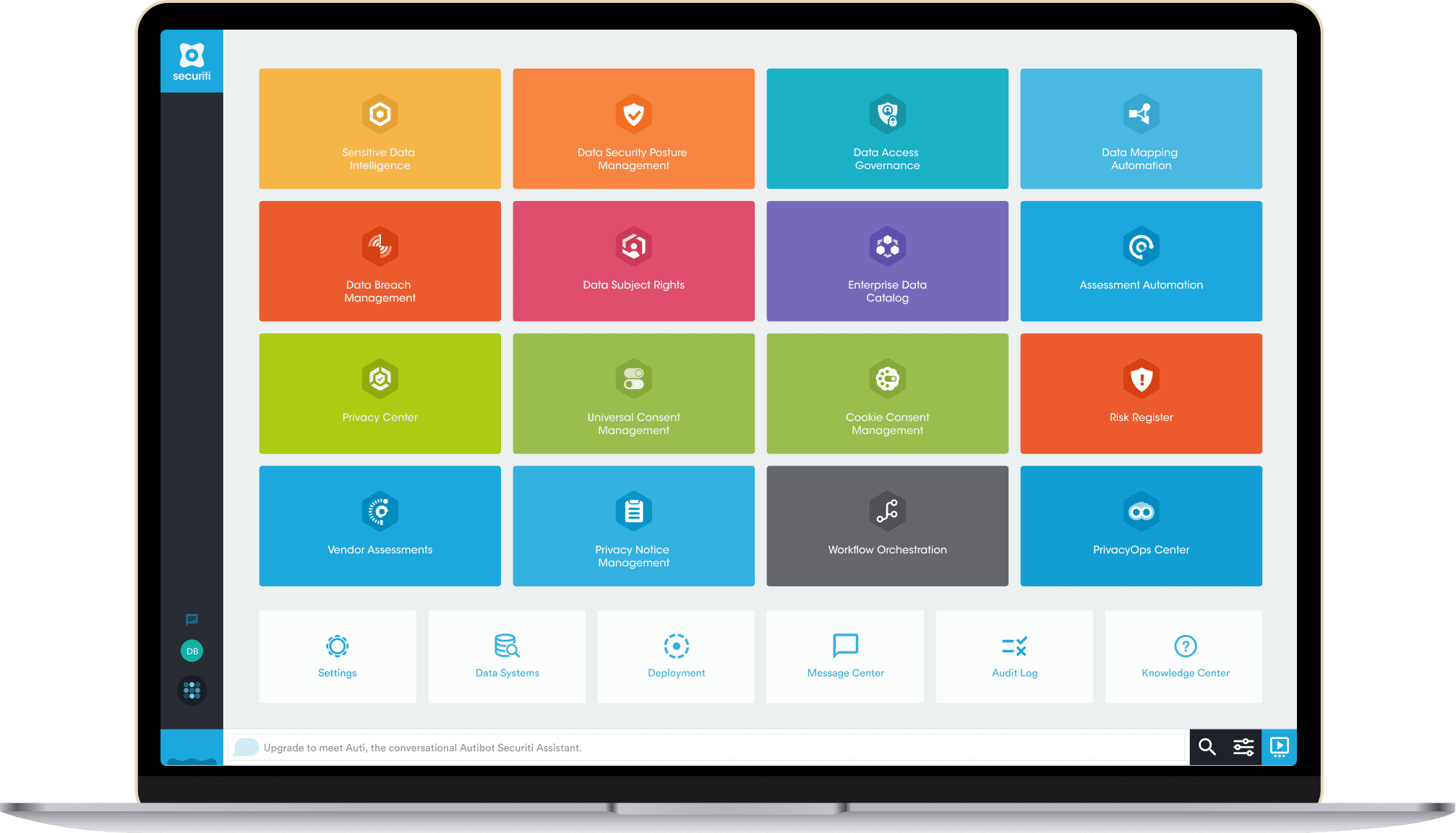
Securiti enables organizations to comply with Jordan’s PDPL through AI-driven PI data discovery, DSR automation, documented accountability, enhanced visibility into data processing activities, and AI-driven process automation.

Canada PIPEDA Compliance Solution

Securiti supports enterprises in their journey toward compliance with Jordan’s PDPL through automation, enhanced data visibility, and identity linking.

See how Securiti helps you comply with various sections of Jordan’s PDPL.


Automate Data Subject Access Request Handling

PDPL Article: 4(B)(1), 8(F), 11(B)(4), 11(B)(5)

The automation of the processing and handling of secure data access requests will greatly reduce the risk of compliance violations and reduce the workforce required to comply with all the data access requests.

PIPEDA dsr portal
Taiwan

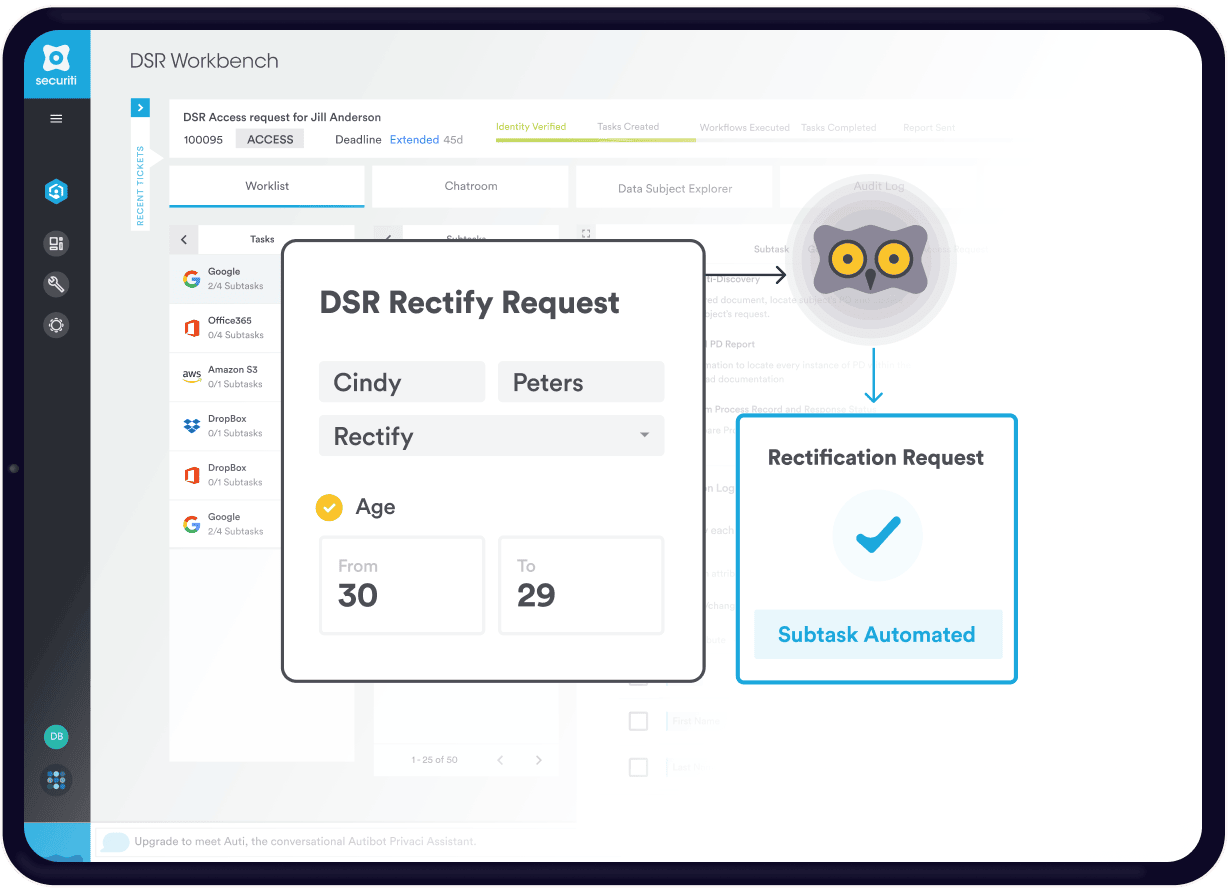
Automate the Processing of Data Rectification Requests

PDPL Article: 4(B)(3), 8(E), 11(B)(4), 11(B)(5)

Fulfill data rectification requests seamlessly using automated data subject verification workflows across all appearances of a data subject’s personal data.

Automate Objection and Restriction of Processing Requests

PDPL Article: 4(B)(4) 4(B)(6), 8(F).

Build a framework for objections and processing restrictions based on business requirements using collaborative workflows.

PIPEDA data access request
JPDP data rectify request

Automate Erasure Requests

PDPL Article: 4(B)(5), 10, 11(B)(4),11B(5).

Fulfill data subjects’ personal data erasure requests swiftly through automated and flexible workflows.

Automate Portability Requests

PDPL Article: 4(B)(7), 8(D), 14.

Fulfill data subjects’ personal data portability requests swiftly through automated and flexible workflows.

PIPEDA data erasure request
PIPEDA personal data monitoring tracking

Automate Withdrawal of Consent

PDPL Article: 4(B)(2), 8(D), 8(F), 10(A)(2).

Fulfill data subjects’ Opt-out requests swiftly through automated and flexible workflows.

Meet Cookie Compliance

PDPL Article: 4(A) 4(B)(2), 5, 6, 8(F), 9, 10(A)(2), 11(B)(2) 14, 15(A)(5).

Automatically scan the web properties within your organization and create cookie categories according to cookie properties and retention periods. Build customizable cookie consent banners according to the applicable jurisdictional cookie consent requirements.

PIPEDA people data graph
Taiwan

Monitor and Track Consent

PDPL Article: 4(A), 4(B)(2), 5, 6, 8(F), 9, 10(A)(2), 11(B)(1), 11(B)(2), 14, 15(A)(5).

Track and honour consent and consent revocation, as well as any changes to data subjects’ preferences concerning the use of their personal data to prevent the transfer or processing of data without their consent.

Map Data Flows

PDPL Articles: 14 ,15.

Track data flows in your organizations by having a centralized catalog of internal data process flows and flows for data transfer to service providers and other third parties. Maintaining updated records of data processing activities enables you to demonstrate compliance with the applicable legal requirements.

Taiwan
Taiwan

Manage Vendor Risk

PDPL Article: 14 

Track, manage, and monitor privacy and security readiness for all your service providers from a single interface. Collaborate instantly with vendors, automate data requests, and manage all vendor contracts and compliance documents.

Automate Breach Response Notification

PDPL Article: 4(B)(8), 20(A)

Automates compliance actions and breach notifications to concerned stakeholders in relation to security incidents by leveraging a knowledge database on security incident diagnosis and response.

Taiwan
PIPEDA Vendor Risk Management

Automate Security Controls

PDPL Article: 8(A), 8(B), 8(C), 12, 13, 14(E).

Automate security, privacy, and governance functions with an intuitive workflow orchestration engine. Leverage built-in integrations and customizable triggers to streamline operations, reduce costs and improve accuracy.

Key Rights Under Jordan PDPL

Right to Access: The data subjects are entitled to view and access their personal data held by the controller, as well as obtain a copy of it.

Right to Withdraw Consent: The PDPL grants data subjects the right to withdraw consent previously given, upon written notice, without affecting the lawfulness of prior processing.

Right to Rectification: The PDPL grants data subjects the right to request corrections, amendments, or updates to their personal data to ensure accuracy.

Right to Restrict/Limit Processing: The PDPL allows data subjects to limit the processing of their personal data to a specific scope or purpose, restricting its use beyond the intended context.

Right to Erasure: The data subjects have the right to request that their personal data be deleted or concealed, subject to the conditions outlined in the law.

Right to Object: The data subjects have the right to object to processing or profiling activities that are unnecessary, excessive, discriminatory, or violate the law.

Right to Data Portability: The data subjects are entitled to obtain a copy of their personal data and transfer it from one controller to another.

Facts Related to Jordan PDPL

1

The PDPL requires controllers to notify The Unit within 72 hours and affected data subjects within 24 hours of discovering a breach that could cause significant harm.

2

A controller must appoint a Data Protection Officer (DPO) if its core activities involve processing personal data, sensitive data, data of legally incapacitated persons, financial information, or if it handles data to be transferred outside Jordan. 

3

The Council may also mandate a DPO in other cases.

4

Under the PDPL, data transfer outside Jordan is generally prohibited unless there is international judicial cooperation, a medical emergency, or the data subject consents after being informed of the inadequate protection level.

5

Penalties for PDPL violations range from 1,000 to 10,000 dinars and double for repeat offenses. Article 22(B) of the PDPL also allows for database deletion or data destruction by court order.

6

The Council has the authority to fully or partially suspend or revoke the offender's license or permit if the breach persists after a warning. Until the violation is remedied, fines of up to 500 dinars per day may be applied, with a maximum cumulative fine of 3% of the violator's yearly income.

7

The aggrieved party can also file a civil action for damages resulting from a PDPL breach.

8

The Unit may publicly disclose proven violations at the violator's expense.

Analyze this article with AI

Prompts open in third-party AI tools.
IDC MarketScape

Securiti named a Leader in the IDC MarketScape for Data Privacy Compliance Software

Read the Report
Videos
View More
Mitigating OWASP Top 10 for LLM Applications 2025
Generative AI (GenAI) has transformed how enterprises operate, scale, and grow. There’s an AI application for every purpose, from increasing employee productivity to streamlining...
View More
Top 6 DSPM Use Cases
With the advent of Generative AI (GenAI), data has become more dynamic. New data is generated faster than ever, transmitted to various systems, applications,...
View More
Colorado Privacy Act (CPA)
What is the Colorado Privacy Act? The CPA is a comprehensive privacy law signed on July 7, 2021. It established new standards for personal...
View More
Securiti for Copilot in SaaS
Accelerate Copilot Adoption Securely & Confidently Organizations are eager to adopt Microsoft 365 Copilot for increased productivity and efficiency. However, security concerns like data...
View More
Top 10 Considerations for Safely Using Unstructured Data with GenAI
A staggering 90% of an organization's data is unstructured. This data is rapidly being used to fuel GenAI applications like chatbots and AI search....
View More
Gencore AI: Building Safe, Enterprise-grade AI Systems in Minutes
As enterprises adopt generative AI, data and AI teams face numerous hurdles: securely connecting unstructured and structured data sources, maintaining proper controls and governance,...
View More
Navigating CPRA: Key Insights for Businesses
What is CPRA? The California Privacy Rights Act (CPRA) is California's state legislation aimed at protecting residents' digital privacy. It became effective on January...
View More
Navigating the Shift: Transitioning to PCI DSS v4.0
What is PCI DSS? PCI DSS (Payment Card Industry Data Security Standard) is a set of security standards to ensure safe processing, storage, and...
View More
Securing Data+AI : Playbook for Trust, Risk, and Security Management (TRiSM)
AI's growing security risks have 48% of global CISOs alarmed. Join this keynote to learn about a practical playbook for enabling AI Trust, Risk,...
AWS Startup Showcase Cybersecurity Governance With Generative AI View More
AWS Startup Showcase Cybersecurity Governance With Generative AI
Balancing Innovation and Governance with Generative AI Generative AI has the potential to disrupt all aspects of business, with powerful new capabilities. However, with...

Spotlight Talks

Spotlight 50:52
From Data to Deployment: Safeguarding Enterprise AI with Security and Governance
Watch Now View
Spotlight 11:29
Not Hype — Dye & Durham’s Analytics Head Shows What AI at Work Really Looks Like
Watch Now View
Spotlight 11:18
Rewiring Real Estate Finance — How Walker & Dunlop Is Giving Its $135B Portfolio a Data-First Refresh
Watch Now View
Spotlight 13:38
Accelerating Miracles — How Sanofi is Embedding AI to Significantly Reduce Drug Development Timelines
Sanofi Thumbnail
Watch Now View
Spotlight 10:35
There’s Been a Material Shift in the Data Center of Gravity
Watch Now View
Spotlight 14:21
AI Governance Is Much More than Technology Risk Mitigation
Watch Now View
Spotlight 12:!3
You Can’t Build Pipelines, Warehouses, or AI Platforms Without Business Knowledge
Watch Now View
Spotlight 47:42
Cybersecurity – Where Leaders are Buying, Building, and Partnering
Rehan Jalil
Watch Now View
Spotlight 27:29
Building Safe AI with Databricks and Gencore
Rehan Jalil
Watch Now View
Spotlight 46:02
Building Safe Enterprise AI: A Practical Roadmap
Watch Now View
Latest
View More
DataAI Security: Why Healthcare Organizations Choose Securiti
Discover why healthcare organizations trust Securiti for Data & AI Security. Learn key blockers, five proven advantages, and what safe data innovation makes possible.
View More
The Anthropic Exploit: Welcome to the Era of AI Agent Attacks
Explore the first AI agent attack, why it changes everything, and how DataAI Security pillars like Intelligence, CommandGraph, and Firewalls protect sensitive data.
Network Security: Definition, Challenges, & Best Practices View More
Network Security: Definition, Challenges, & Best Practices
Discover what network security is, how it works, types, benefits, and best practices. Learn why network security is core to having a strong data...
View More
What is Cybersecurity Management?
Discover what cybersecurity management is, its importance, the CISO’s role, types, and best practices for effective cybersecurity management. Learn more.
Montana Privacy Amendment on Notices: What to Change by Oct 1 View More
Montana Privacy Amendment on Notices: What to Change by Oct 1
Download the whitepaper to learn about the Montana Privacy Amendment on Notices and what to change by Oct 1. Learn how Securiti helps.
2026 Privacy Law Updates: Key Developments You Need to Know View More
2026 Privacy Law Updates: Key Developments You Need to Know
Access the whitepaper to learn about key privacy law updates in 2026. Discover key developments you need to know. Learn how Securiti can help.
View More
The Future of Privacy: Top Emerging Privacy Trends in 2026
Access the infographic to discover the top emerging privacy trends in 2026. Learn what organizations must do to thrive in 2026 and beyond.
India’s DPDPA Rules View More
India’s DPDPA Rules
Access the infographic to learn about India’s DPDPA 2025 basics. Discover phased timelines, what the rules require, when they apply, key obligations, and much...
View More
Navigating HITRUST: A Guide to Certification
Securiti's eBook is a practical guide to HITRUST certification, covering everything from choosing i1 vs r2 and scope systems to managing CAPs & planning...
The DSPM Architect’s Handbook View More
The DSPM Architect’s Handbook: Building an Enterprise-Ready Data+AI Security Program
Get certified in DSPM. Learn to architect a DSPM solution, operationalize data and AI security, apply enterprise best practices, and enable secure AI adoption...
What's
New