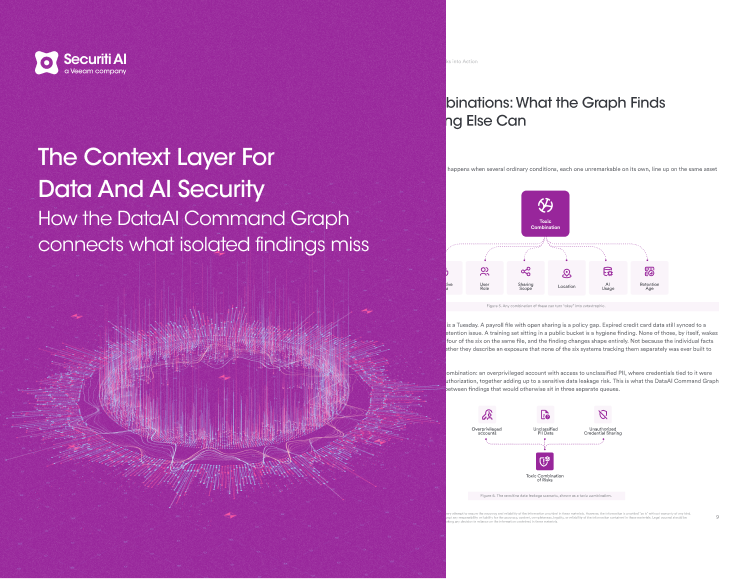
Enterprise security teams have never produced more findings, and never had more difficulty ranking them. Data discovery, identity management, cloud posture, and AI inventories each return accurate results, yet none supply the context layer that explains how one finding relates to another. In fact, more than 20% of organizations reported a breach targeting their AI models or applications, according to IBM's 2026 Cost of a Data Breach Report. The leading causes were weaknesses in the surrounding systems: compromised APIs, applications, or plug-ins, and cloud misconfigurations affecting AI workloads.
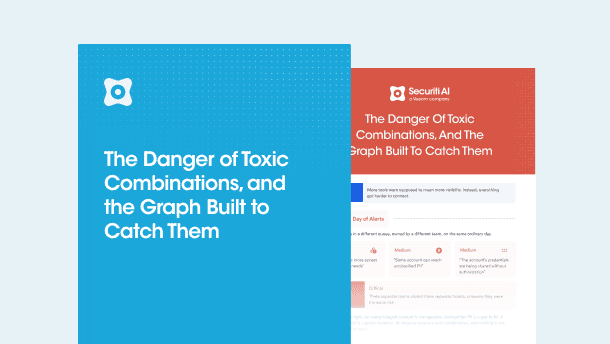
However, the harder problem is not the volume of findings but their isolation. Security, privacy, and governance teams report accurate numbers for the same environment and still disagree on what those numbers mean. For instance, an overprivileged account, unclassified PII, and an unauthorized credential share may sit in three queues as three medium-severity tickets. Together, they form one exposure nobody has seen whole.
Here, a shared context layer across data, identities, permissions, cloud resources, and AI assets can play a critical role in overcoming these challenges.
Download the whitepaper to learn how Securiti, a Veeam company, connects data, identity, cloud, and AI findings into one contextual model of risk.