A compliance analyst pulls the same access list for a SOC 2 review on a Monday. Two weeks later, the same list comes back, reformatted, for an ISO 27001 auditor. Same accounts, same permissions, same underlying fact, proven twice, in two different templates, for two different rooms.
It is the compliance version of a replay review: the play does not change, but you still owe every ref in the booth their own explanation of what just happened.
The Hours Nobody Adds Up
That repetition adds up faster than most teams realize. Vanta's 2025 State of Trust Report found that organizations now spend twelve working weeks a year on compliance-related tasks alone, up from eleven the year before. That is not a one-time activity. It is the baseline, every year, for as long as frameworks keep asking about the same control separately.
The Debt Comes Due Differently Everywhere
Call it compliance debt: every version of a control that has not been proven for a given framework sits as a small, quiet liability, compounding until an audit or a breach calls it due. The bill, when it comes, is not uniform either. The same missed control can cost a company up to €35M or 7% of its total worldwide annual revenue under the EU AI Act, or up to $2.19M per violation for HIPAA, depending only on which regulator happens to be asking.
Artificial intelligence does not replace this fragmentation. It adds a new framework's worth of obligations on top of the ones already being tracked, which means the debt compounds faster, not differently, and most data security posture management (DSPM) programs were never built to track compliance debt in the first place. They were built to find sensitive data, not to notice that the same control has already been proven four times this year.
This Is Not a Staffing Problem
The instinct is to throw more people or process at this: a second analyst, a tighter deadline, a bigger shared spreadsheet. None of it works, because the problem was never speed or staffing. It is that nothing connects one framework's proof of a control to another's.
Automating Compliance with Securiti
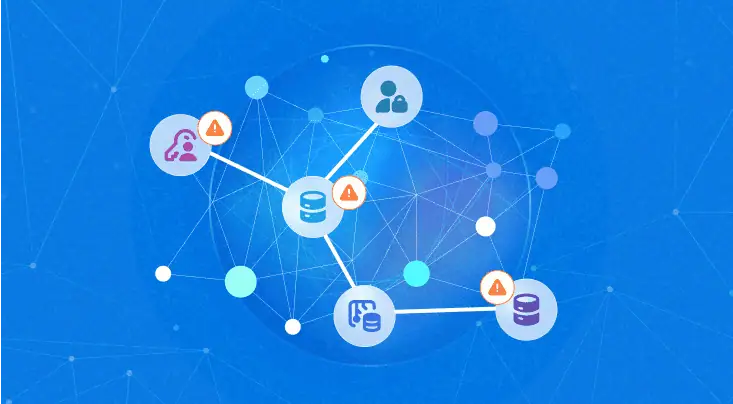
Securiti's Compliance Management builds on the same DSPM foundation that already tracks every dataset, identity, and permission in the environment, and extends it with common controls and tests, a built-in library of frameworks and regulations, and automated reporting. A control mapped once reaches every framework it satisfies, SOC 2, ISO 27001, GDPR, HIPAA, PCI DSS, and more, instead of being proven separately for each.
What This Buys You
Not just fewer hours, though the hours are real. It is the ability to say, honestly, that you could pass an audit tomorrow, on AI governance or anything else, instead of joining the 78% percent of leaders who cannot. This is also a compliance program that scales with the next framework instead of racing to catch up with it, DSPM and compliance working off the same graph instead of two separate tools that never talk to each other.
We broke down what these costs, control by control, audit cycle by audit cycle, in a longer piece: Common Controls For Every Framework.
Request a demo to learn more about Securiti’s DSPM.