Announcing Agent Commander - The First Integrated solution from Veeam + Securiti.ai enabling the scaling of safe AI agents

View

DSPM Checklist 2026: Essential Steps for Effective Data Security Posture Management

Author

Nikhil Girdhar

Senior Director for Data Security products at Securiti.

Listen to the content

Data Security Posture Management, or DSPM — a term defined by Gartner as a technology that provides visibility into where sensitive data is in the cloud, who has access to it, how it has been used, and what its security posture is — goes a long way in enabling coverage for platform-as-a-service (PaaS) and infrastructure-as-a-service (IaaS) cloud environments, but still leaves data and configuration gaps for on-prem systems, data in motion, and SaaS systems.

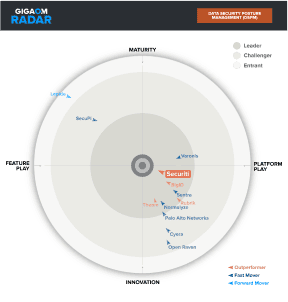
Securiti Tops DSPM Ratings

Securiti’s Data Command Center dominates GigaOm’s DSPM Evaluation with highest ratings for key capabilities, #emerging capabilities, and business criteria.

Read the Report
Securiti Tops DSPM Ratings

Businesses need a comprehensive solution for protecting their data everywhere and building a unified Data Command Center that will extend beyond the scope of DSPM and ensure a future-proof approach to data security, governance, privacy, and compliance. Organizations need to start by looking at their data architecture and making sure it can uphold the following key tenants.

1. Ensure comprehensive data systems coverage across environments

At the enterprise level, DSPM is a critical step — but orgs need an even broader view of their data. Securing enterprise data at scale demands an extensive reach across all of your org’s systems, spanning cloud, on-prem, service-provider, and other third-party environments. Having the ability to discover all data (e.g., cloud, on-prem, PaaS, IaaS, SaaS, data in motion) across potentially hundreds of systems gives businesses a holistic view that empowers them to unlock contextual insights, harness those insights responsibly and efficiently, and facilitate informed decision-making.

2. Define taxonomies to create standardization

With comprehensive discovery at scale — even into dark data and shadow systems — organizations can gain a holistic view into all their data, unveiling the nuances within datasets and unlocking the ability to apply a common grammar and taxonomy to classification systems. Leveraging a standard taxonomy, orgs can unlock the context around data and understand it with great accuracy.

3. Unlock trustworthy contextual insights from data

Querying rich metadata using standardized frameworks ensures that the results derived from those queries are more accessible and trustworthy, enhancing the reliability of contextual data insights. Data teams can be confident about the contextual insights they unlock and ultimately achieve a high degree of data trust, fostering much-needed alignment across privacy, compliance, governance, IT, and security teams — and for the entire business.

4. Verify data controls

With contextual insight and increased trust in data, security teams can gain visibility into data intelligence and efficiently validate data controls across diverse environments that include private clouds, data clouds, SaaS applications, on-prem environments, and data in motion. This is key for adhering to multiple regulatory mandates for compliance.

5. Reduce risk due to misconfiguration

Configuration errors in cloud services are not uncommon, and they can derive from causes as diverse as rushed development and deployment to out-of-the-box automation to improper encrypting. Misconfigurations can leave sensitive data exposed and vulnerable to unauthorized access. With the data intelligence that comes from enhanced data trust, security teams can promptly identify and rectify misconfigured datasets — and efficiently prioritize the most critical ones that may contain sensitive information, minimizing security vulnerabilities, breach incidents, and other operational disruptions — and reduce false positives and alert fatigue by auto-remediating security violations at scale.

6. Govern access to your data

Enterprise security teams need to be able to manage internal access controls and ensure the least privileged access across the company. With unified data controls, they can gain granular insights into user permissions and access patterns, enforce stringent controls by dynamically masking sensitive data and enabling secure data sharing, and adhere to important compliance requirements across multiple global regulations.

7. Secure data flows

For a more comprehensive approach to privacy, security, and governance, teams across the enterprise need to be able to visualize how data moves between systems in order to accurately assess whether privacy and security controls apply consistently to the data. This involves the ability to track duplicates for remediation and trace data transformations across files.

8. Respond to data breaches promptly

In the event of a data breach or violation, efficient response management is key for compliance. The alternative can run up detrimental costs in penalties and fees, as well as damaged brand reputation. Enterprises that prioritize security risks by remediating the riskiest violations first will be in a better position to identify and remediate threats before they arise, as well as handle breaches in an efficient and compliant manner.

9. Enable hyper-scalability

Broad system coverage, coupled with contextual understanding, enables organizations to manage vast data volumes — even petabytes of data — seamlessly. This scalability empowers teams to analyze and utilize data efficiently, driving tangible business value and innovation.

Establishing a resilient data infrastructure that upholds these nine tenets is imperative for organizations to navigate the evolving data landscape successfully. By standing up a next-gen Data Command Center that brings all privacy, security, governance, and compliance challenges under the oversight of one unified system, businesses can fortify their data defenses, protect critical sensitive assets, drive operational efficiency, enhance brand trust, and unlock transformative insights for sustainable growth.


Play Video

Analyze this article with AI

Prompts open in third-party AI tools.
Join Our Newsletter

Get all the latest information, law updates and more delivered to your inbox


Share

More Stories that May Interest You
Videos
View More
Rehan Jalil, Veeam on Agent Commander : theCUBE + NYSE Wired: Cyber Security Leaders
Following Veeam’s acquisition of Securiti, the launch of Agent Commander marks an important step toward helping enterprises adopt AI agents with greater confidence. In...
View More
Mitigating OWASP Top 10 for LLM Applications 2025
Generative AI (GenAI) has transformed how enterprises operate, scale, and grow. There’s an AI application for every purpose, from increasing employee productivity to streamlining...
View More
Top 6 DSPM Use Cases
With the advent of Generative AI (GenAI), data has become more dynamic. New data is generated faster than ever, transmitted to various systems, applications,...
View More
Colorado Privacy Act (CPA)
What is the Colorado Privacy Act? The CPA is a comprehensive privacy law signed on July 7, 2021. It established new standards for personal...
View More
Securiti for Copilot in SaaS
Accelerate Copilot Adoption Securely & Confidently Organizations are eager to adopt Microsoft 365 Copilot for increased productivity and efficiency. However, security concerns like data...
View More
Top 10 Considerations for Safely Using Unstructured Data with GenAI
A staggering 90% of an organization's data is unstructured. This data is rapidly being used to fuel GenAI applications like chatbots and AI search....
View More
Gencore AI: Building Safe, Enterprise-grade AI Systems in Minutes
As enterprises adopt generative AI, data and AI teams face numerous hurdles: securely connecting unstructured and structured data sources, maintaining proper controls and governance,...
View More
Navigating CPRA: Key Insights for Businesses
What is CPRA? The California Privacy Rights Act (CPRA) is California's state legislation aimed at protecting residents' digital privacy. It became effective on January...
View More
Navigating the Shift: Transitioning to PCI DSS v4.0
What is PCI DSS? PCI DSS (Payment Card Industry Data Security Standard) is a set of security standards to ensure safe processing, storage, and...
View More
Securing Data+AI : Playbook for Trust, Risk, and Security Management (TRiSM)
AI's growing security risks have 48% of global CISOs alarmed. Join this keynote to learn about a practical playbook for enabling AI Trust, Risk,...

Spotlight Talks

Spotlight 50:52
From Data to Deployment: Safeguarding Enterprise AI with Security and Governance
Watch Now View
Spotlight 11:29
Not Hype — Dye & Durham’s Analytics Head Shows What AI at Work Really Looks Like
Watch Now View
Spotlight 11:18
Rewiring Real Estate Finance — How Walker & Dunlop Is Giving Its $135B Portfolio a Data-First Refresh
Watch Now View
Spotlight 13:38
Accelerating Miracles — How Sanofi is Embedding AI to Significantly Reduce Drug Development Timelines
Sanofi Thumbnail
Watch Now View
Spotlight 10:35
There’s Been a Material Shift in the Data Center of Gravity
Watch Now View
Spotlight 14:21
AI Governance Is Much More than Technology Risk Mitigation
Watch Now View
Spotlight 12:!3
You Can’t Build Pipelines, Warehouses, or AI Platforms Without Business Knowledge
Watch Now View
Spotlight 47:42
Cybersecurity – Where Leaders are Buying, Building, and Partnering
Rehan Jalil
Watch Now View
Spotlight 27:29
Building Safe AI with Databricks and Gencore
Rehan Jalil
Watch Now View
Spotlight 46:02
Building Safe Enterprise AI: A Practical Roadmap
Watch Now View
Latest
View More
Introducing Agent Commander
The promise of AI Agents is staggering— intelligent systems that make decisions, use tools, automate complex workflows act as force multipliers for every knowledge...
Risk Silos: The Biggest AI Problem Boards Aren’t Talking About View More
Risk Silos: The Biggest AI Problem Boards Aren’t Talking About
Boards are tuned in to the AI conversation, but there’s a blind spot many organizations still haven’t named: risk silos. Everyone agrees AI governance...
Largest Fine In CCPA History_ What The Latest CCPA Enforcement Action Teaches Businesses View More
Largest Fine In CCPA History: What The Latest CCPA Enforcement Action Teaches Businesses
Businesses can take some vital lessons from the recent biggest enforcement action in CCPA history. Securiti’s blog covers all the important details to know.
View More
AI & HIPAA: What It Means and How to Automate Compliance
Explore how the Health Insurance Portability and Accountability Act (HIPAA) applies to Artificial Intelligence (AI) in securing Protected Health Information (PHI). Learn how to...
Consent Orchestration for Safe AI View More
Consent Orchestration for Safe AI
Access the whitepaper and learn how to operationalize consent across data and GenAI with a practical framework, enforceable controls, and a 30/60/90-day implementation roadmap.
View More
2026 Privacy Compliance Readiness Checklist
Access the whitepaper to unlock a practical guide to strengthening privacy readiness, featuring key insights, the 2026 privacy compliance checklist, and how to operationalize...
DataAI Security for Retail View More
DataAI Security for Retail
Download the brief and explore how retailers can securely scale Data & AI with Securiti DataAI Command Center and protect sensitive data, manage risk,...
Emerging AI Security Trends For 2026 View More
Emerging AI Security Trends For 2026
Securiti’s latest infographic provides security leaders with a walkthrough of all the emerging AI security trends for 2026 to help them assess and plan...
View More
Take the Data Risk Out of AI
Learn how to prepare enterprise data for safe Gemini Enterprise adoption with upstream governance, sensitive data discovery, and pre-index policy controls.
View More
Navigating HITRUST: A Guide to Certification
Securiti's eBook is a practical guide to HITRUST certification, covering everything from choosing i1 vs r2 and scope systems to managing CAPs & planning...
What's
New