
Announcing Agent Commander - The First Integrated solution from Veeam + Securiti.ai enabling the scaling of safe AI agents

View

Avoiding the Pitfalls of CPRA Non-Compliance

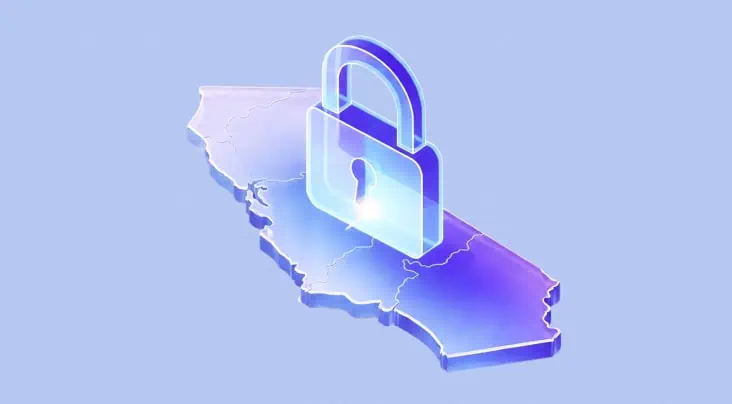
The CPRA significantly changes and expands the CCPA's obligations, bringing California privacy law closer to the GDPR, necessitating businesses to ensure compliance and avoid penalties imposed by the CPRA.

  • CPRA is a revised and improved version of the CCPA that goes into effect on January 1, 2023. CPRA is also referred to as CCPA 2.0.
  • CPRA applies to for-profit businesses that buy, sell, or exchange personal information of more than 100,000 customers/households/devices, make more than $25 million in annual revenue or derive 50% of their yearly revenue from selling or sharing consumers' personal information.
  • The CPRA gives data subjects eight different rights regarding exchanging, processing, and disclosing their personal information.

DOWNLOAD INFOGRAPHIC

Award-winning technology, built by a proven team, backed by confidence. Learn more.

Important Facts About Avoiding the Pitfalls of CPRA Non-Compliance

The CPRA adds administrative fines for intentional violations involving the sensitive personal information of individuals under 16 years of age. Fines of up to $7,500 may be imposed on entities that aren’t adhering to the CPRA’s requirements.

CPRA improves the CCPA's privacy notice requirements, requiring firms to be honest with their customers if they gather sensitive personal information (SPI) and establish personal information retention periods.

Under the CPRA, businesses need to have the "Do Not Sell or Share My Personal Information" and the new "Limit the Use of My Sensitive Personal Information" options prominently displayed and readily available across multiple pages of their website. Any such requests should be honored and processed straightaway.

Additionally, the CPRA establishes the California Privacy Protection Agency (CPPA) as the exclusive agency responsible for interpreting and enforcing the law. The CPPA will be the first US-based regulatory entity solely focused on data privacy issues, superseding rule-making power from the California Attorney General.

Play Video

How Securiti’s CPRA Compliance Helps You

Businesses that fall under the CPRA and do business in California have until January 1, 2023, to comply with the new regulation. Businesses will only be punished for CPRA infractions from July 1, 2023.

It should come as no surprise that CPRA will alter how websites acquire customers' personal data. The faster businesses understand and comply with CPRA, the greater their prospects of tightening data protection, meeting compliance, and gaining customer trust.

Securiti’s PrivacyOps platform automates compliance obligations using robotic automation, artificial intelligence, and machine learning, freeing up critical resources for other business areas. Automate all privacy obligations across your organization today to avoid the pitfalls of non-compliance with the CPRA.

Our Readers Frequently Ask:

To strengthen the rights of Californians, the CPRA aims to amend and broaden the California Consumer Privacy Act (CCPA). More opt-out options are available to customers, and organizations must consciously manage data privacy.

Businesses are required to abide by the CPRA if they meet one of the requirements: organizations that serve at least 100,000 households or customers; have a minimum of $25 million in gross annual revenue; at least half of their annual gross revenue comes from the sale or exchange of user data.

Under the CCPA, rights are restricted to residents of California. A natural person (as opposed to a company or other commercial entity) who lives in California is considered to be a resident of the state, even if they are just passing through.

All-in-One Solution For Your Business Needs

The Multi-disciplinary practice to grow trust-equity of your brand and comply with privacy regulations

Top 7 Employer’s Privacy Obligations

Discover employer privacy obligations in the remote work era. Download our white paper for insights today.

Videos
View More
Mitigating OWASP Top 10 for LLM Applications 2025
Generative AI (GenAI) has transformed how enterprises operate, scale, and grow. There’s an AI application for every purpose, from increasing employee productivity to streamlining...
View More
Top 6 DSPM Use Cases
With the advent of Generative AI (GenAI), data has become more dynamic. New data is generated faster than ever, transmitted to various systems, applications,...
View More
Colorado Privacy Act (CPA)
What is the Colorado Privacy Act? The CPA is a comprehensive privacy law signed on July 7, 2021. It established new standards for personal...
View More
Securiti for Copilot in SaaS
Accelerate Copilot Adoption Securely & Confidently Organizations are eager to adopt Microsoft 365 Copilot for increased productivity and efficiency. However, security concerns like data...
View More
Top 10 Considerations for Safely Using Unstructured Data with GenAI
A staggering 90% of an organization's data is unstructured. This data is rapidly being used to fuel GenAI applications like chatbots and AI search....
View More
Gencore AI: Building Safe, Enterprise-grade AI Systems in Minutes
As enterprises adopt generative AI, data and AI teams face numerous hurdles: securely connecting unstructured and structured data sources, maintaining proper controls and governance,...
View More
Navigating CPRA: Key Insights for Businesses
What is CPRA? The California Privacy Rights Act (CPRA) is California's state legislation aimed at protecting residents' digital privacy. It became effective on January...
View More
Navigating the Shift: Transitioning to PCI DSS v4.0
What is PCI DSS? PCI DSS (Payment Card Industry Data Security Standard) is a set of security standards to ensure safe processing, storage, and...
View More
Securing Data+AI : Playbook for Trust, Risk, and Security Management (TRiSM)
AI's growing security risks have 48% of global CISOs alarmed. Join this keynote to learn about a practical playbook for enabling AI Trust, Risk,...
AWS Startup Showcase Cybersecurity Governance With Generative AI View More
AWS Startup Showcase Cybersecurity Governance With Generative AI
Balancing Innovation and Governance with Generative AI Generative AI has the potential to disrupt all aspects of business, with powerful new capabilities. However, with...

Spotlight Talks

Spotlight 50:52
From Data to Deployment: Safeguarding Enterprise AI with Security and Governance
Watch Now View
Spotlight 11:29
Not Hype — Dye & Durham’s Analytics Head Shows What AI at Work Really Looks Like
Watch Now View
Spotlight 11:18
Rewiring Real Estate Finance — How Walker & Dunlop Is Giving Its $135B Portfolio a Data-First Refresh
Watch Now View
Spotlight 13:38
Accelerating Miracles — How Sanofi is Embedding AI to Significantly Reduce Drug Development Timelines
Sanofi Thumbnail
Watch Now View
Spotlight 10:35
There’s Been a Material Shift in the Data Center of Gravity
Watch Now View
Spotlight 14:21
AI Governance Is Much More than Technology Risk Mitigation
Watch Now View
Spotlight 12:!3
You Can’t Build Pipelines, Warehouses, or AI Platforms Without Business Knowledge
Watch Now View
Spotlight 47:42
Cybersecurity – Where Leaders are Buying, Building, and Partnering
Rehan Jalil
Watch Now View
Spotlight 27:29
Building Safe AI with Databricks and Gencore
Rehan Jalil
Watch Now View
Spotlight 46:02
Building Safe Enterprise AI: A Practical Roadmap
Watch Now View
Latest
View More
Introducing Agent Commander
The promise of AI Agents is staggering— intelligent systems that make decisions, use tools, automate complex workflows act as force multipliers for every knowledge...
Risk Silos: The Biggest AI Problem Boards Aren’t Talking About View More
Risk Silos: The Biggest AI Problem Boards Aren’t Talking About
Boards are tuned in to the AI conversation, but there’s a blind spot many organizations still haven’t named: risk silos. Everyone agrees AI governance...
View More
AI & HIPAA: What It Means and How to Automate Compliance
Explore how the Health Insurance Portability and Accountability Act (HIPAA) applies to Artificial Intelligence (AI) in securing Protected Health Information (PHI). Learn how to...
CNIL’s Guidance on Multi-Device Consent View More
CNIL’s Guidance on Multi-Device Consent
Understand CNIL’s guidance on multi-device cookie consent—requirements for syncing preferences across devices, valid consent standards, transparency, and compliance risks.
Financial Data & AI View More
Financial Data & AI: A DSPM Playbook for Secure Innovation
Learn how financial institutions can secure sensitive data and AI with DSPM. Explore real-world risks, DORA compliance, responsible AI, and strategies to strengthen cyber...
2026 Strategic Priorities for Privacy Leaders: A CPO Brief View More
2026 Strategic Priorities for Privacy Leaders: A CPO Brief
A 2026 briefing for Chief Privacy Officers (CPOs), AI governance, global law updates, consent modernization, cross-border transfers, automation and measurable risk reduction.
View More
Solution Brief: Microsoft Purview + Securiti
Extend Microsoft Purview with Securiti to discover, classify, and reduce data & AI risk across hybrid environments with continuous monitoring and automated remediation. Learn...
Top 7 Data & AI Security Trends 2026 View More
Top 7 Data & AI Security Trends 2026
Discover the top 7 Data & AI security trends for 2026. Learn how to secure AI agents, govern data, manage risk, and scale AI...
View More
Navigating HITRUST: A Guide to Certification
Securiti's eBook is a practical guide to HITRUST certification, covering everything from choosing i1 vs r2 and scope systems to managing CAPs & planning...
The DSPM Architect’s Handbook View More
The DSPM Architect’s Handbook: Building an Enterprise-Ready Data+AI Security Program
Get certified in DSPM. Learn to architect a DSPM solution, operationalize data and AI security, apply enterprise best practices, and enable secure AI adoption...
What's
New