ECL - Saudi Arabia E-Commerce Law

Get compliant with the most comprehensive PrivacyOps platform

Last Updated on November 16, 2023

Schedule Your
Personal Demo

Learn how you can leverage Securiti’s DataAI Command Platform to address data security, privacy, governance, and compliance.

See a demo
Schedule your demo today

On January 31, 2020, the government of Saudi Arabia issued the Executive Regulations to the Saudi E-Commerce Law 2019 (“ECL”) that was in effect since October 2019. The Executive Regulations together with the ECL (“Law”) aim to protect consumers’ personal data by requiring organizations to take appropriate technical and administrative measures.

The solution

securiti.ai enables organizations to comply with the ECL through AI-driven PI data discovery, DSR automation, documented accountability, enhanced visibility into data processing activities, and AI-driven process automation.

Saudi Arabia E Commerce Law Compliance Solution securiti

securiti.ai supports enterprises in their journey toward compliance with the ECL through automation, enhanced data visibility, and identity linking.

See how our comprehensive PrivacyOps platform helps you comply with various sections of ECL


saudi ecl dsr rectify request securiti

Automate processing of rectification requests

ECL Article: 4

Fulfill data rectification requests, seamlessly, with the help of automated data subject verification workflows across all appearances of a data subject’s personal data.

Automate erasure requests

ECL Article: 4

Fulfill data subject’s’ erasure requests through automated and flexible workflows.

saudi ecl data erasure request securiti
saudi ecl personal data monitoring tracking securiti

Continuous monitoring and tracking

ECL Article: 5

Keep track of risks against non-compliance to data subjects’ rights by continuously monitoring and scanning consumer personal data.

Automate People Data Graph

ECL Article 18(2)(h)

Discover personal information stored across all your systems within the organization and link them back to a unique consumer. Also, allowing visualization of personal data sprawl and identifying compliance risks.

saudi ecl personal information data linking securiti
saudi ecl Universal Consent Management Dashboard securiti

Monitor and track consent

ECL Article: 5(3)

Track consents of consumers and their revocations to ensure that no data is retained for any purposes other than it was originally consented for.

Assess ECL readiness

ECL Articles: 5(1) and 5(2)

Measure your organization's posture against ECL requirements with the help of our multi-regulation, collaborative, readiness and privacy impact assessment system. Seamlessly expand assessment capabilities across your intermediary platforms to maintain compliance against ECL requirements.

ECL Readiness Assessment Automation securiti
saudi ecl Data Mapping Flow securiti

Map data flows

ECL Article: 5(2)(e) and 18

Track, manage and monitor privacy and security readiness for all service providers and intermediary platforms from a single interface. Collaborate instantly, automate data requests and manage all vendor contracts and compliance documents.

Manage vendor risk

ECL Article: 5(2)(e) and 18

Track, manage and monitor privacy and security readiness for all service providers and intermediary platforms from a single interface. Collaborate instantly, automate data requests and manage all vendor contracts and compliance documents.

saudi ecl Vendor Risk Management securiti
saudi ecl breach response notification securiti

Breach Response Notification

ECL Article: 5(2)(c) and 18(2)(g)

Automate compliance actions and breach notifications to concerned stakeholders with regards to security incidents by leveraging a knowledge database on security incident diagnosis and response.

key data subject rights encoded within ECL

Rectification: The consumer has the right to correct an error in electronic communications if the consumer notifies the service provider of the error within 24 hours of the time the electronic communications are sent.

Information: The consumer has the right to know identifying information and contact details of the service provider and e-store and the characteristics of services or goods provided electronically.

Revocation: The consumer has the right to request suspension or unsubscribe from electronic advertisements.

Termination: Consumers have the right to cancel any e-contract within 7 days of the delivery of products or services provided that those products or services are not used. Consumers can also terminate any e-contract if delivery of the products or services is delayed beyond 15 days.

Purpose: A controller cannot use consumers’ personal data for any other purpose without the express consent of the consumer, other than the purpose it was obtained for.

Quick facts about ECL

1

The ECL is considered a historical phase for Saudi Arabia in its national economy.

2

The ECL applies to e-commerce service providers providing goods or services to consumers in Saudi Arabia, even if they are NOT based in Saudi Arabia.

3

Under the ECL, service providers must notify the Ministry of Commerce and Investment if a personal data breach takes place within three days from the knowledge of the breach.

4

The severity of penalties depends on the nature of the violation, ranging from a fine up to a maximum of one million Saudi Riyals.

Analyze this article with AI

Prompts open in third-party AI tools.
IDC MarketScape

Securiti named a Leader in the IDC MarketScape for Data Privacy Compliance Software

Read the Report
Videos
View More
Rehan Jalil, Veeam on Agent Commander : theCUBE + NYSE Wired: Cyber Security Leaders
Following Veeam’s acquisition of Securiti, the launch of Agent Commander marks an important step toward helping enterprises adopt AI agents with greater confidence. In...
View More
Mitigating OWASP Top 10 for LLM Applications 2025
Generative AI (GenAI) has transformed how enterprises operate, scale, and grow. There’s an AI application for every purpose, from increasing employee productivity to streamlining...
View More
Top 6 DSPM Use Cases
With the advent of Generative AI (GenAI), data has become more dynamic. New data is generated faster than ever, transmitted to various systems, applications,...
View More
Colorado Privacy Act (CPA)
What is the Colorado Privacy Act? The CPA is a comprehensive privacy law signed on July 7, 2021. It established new standards for personal...
View More
Securiti for Copilot in SaaS
Accelerate Copilot Adoption Securely & Confidently Organizations are eager to adopt Microsoft 365 Copilot for increased productivity and efficiency. However, security concerns like data...
View More
Top 10 Considerations for Safely Using Unstructured Data with GenAI
A staggering 90% of an organization's data is unstructured. This data is rapidly being used to fuel GenAI applications like chatbots and AI search....
View More
Gencore AI: Building Safe, Enterprise-grade AI Systems in Minutes
As enterprises adopt generative AI, data and AI teams face numerous hurdles: securely connecting unstructured and structured data sources, maintaining proper controls and governance,...
View More
Navigating CPRA: Key Insights for Businesses
What is CPRA? The California Privacy Rights Act (CPRA) is California's state legislation aimed at protecting residents' digital privacy. It became effective on January...
View More
Navigating the Shift: Transitioning to PCI DSS v4.0
What is PCI DSS? PCI DSS (Payment Card Industry Data Security Standard) is a set of security standards to ensure safe processing, storage, and...
View More
Securing Data+AI : Playbook for Trust, Risk, and Security Management (TRiSM)
AI's growing security risks have 48% of global CISOs alarmed. Join this keynote to learn about a practical playbook for enabling AI Trust, Risk,...

Spotlight Talks

Spotlight 59:11
Data Controls for AI: Findings from the 2026 GigaOm DSPM Research
Watch Now View
Spotlight 1:02:06
Consent by proxy: When AI agents start deciding for us
Watch Now View
Spotlight 1:00:41
Future-Proofing for the Privacy Professional
Watch Now View
Spotlight 50:52
From Data to Deployment: Safeguarding Enterprise AI with Security and Governance
Watch Now View
Spotlight 11:29
Not Hype — Dye & Durham’s Analytics Head Shows What AI at Work Really Looks Like
Watch Now View
Spotlight 11:18
Rewiring Real Estate Finance — How Walker & Dunlop Is Giving Its $135B Portfolio a Data-First Refresh
Watch Now View
Spotlight
Choosing the Right DSPM: An Industry Analyst’s Perspective
Watch Now View
Spotlight 13:38
Accelerating Miracles — How Sanofi is Embedding AI to Significantly Reduce Drug Development Timelines
Sanofi Thumbnail
Watch Now View
Spotlight 10:35
There’s Been a Material Shift in the Data Center of Gravity
Watch Now View
Spotlight 14:21
AI Governance Is Much More than Technology Risk Mitigation
Watch Now View
Latest
Australia’s Office of AI: Why Annual Audits Miss What Your AI Can Reach View More
Australia’s Office of AI: Why Annual Audits Miss What Your AI Can Reach
Picture this: a fictional but entirely plausible scenario. An Australian financial institution's AI systems spend six months accessing a customer data repository nobody has...
View More
A Complete DSPM Needs Classification and Context
Classification is one of the core functions a DSPM program handles, and it usually runs in tandem with discovery, since together they form the...
View More
DSPM for AI: Extending Data Posture to Prompts, Pipelines & Agents
Learn how DSPM for AI helps enterprises discover sensitive data, assess exposure, govern access, reduce risk, and secure data before AI systems and agents...
DSPM vs DLP: Key Data Security Differences Explained View More
DSPM vs DLP: Key Data Security Differences Explained
Compare DSPM vs DLP to understand how they differ in data discovery, classification, monitoring, prevention, risk reduction, and protecting sensitive enterprise data.
The Context Layer for Data+AI Security View More
The Context Layer for Data+AI Security
Discover how Securiti’s DataAI Command Graph connects data, identity, cloud, and AI findings to uncover contextual risk and toxic combinations.
View More
Privacy RFP Buyer’s Guide: 120+ Questions to Evaluate Privacy Automation Platforms
Download the Privacy RFP Buyer’s Guide with 120+ practical questions to evaluate privacy automation platforms across compliance, security, integrations, governance, and scalability.
The Toxic Combination Problem in DataAI Risks View More
The Toxic Combination Problem in DataAI Risks
Discover how siloed security alerts create hidden toxic risk combinations and how correlated context helps reduce alert fatigue and uncover compound risks faster.
The Cloud Storage Bill Nobody Reads View More
The Cloud Storage Bill Nobody Reads
Hidden cloud storage costs add up fast. Learn how redundant, obsolete, and trivial data drives unnecessary spend, expands risk, and why automated data minimization...
View More
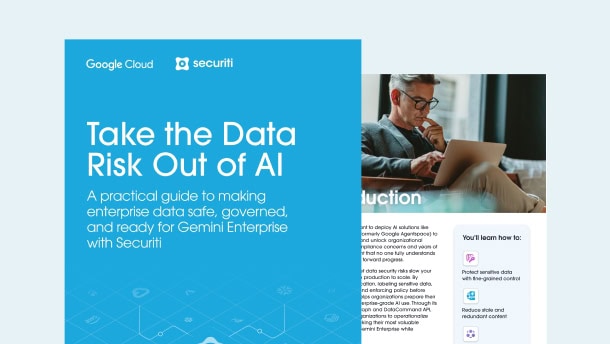
Take the Data Risk Out of AI
Learn how to prepare enterprise data for safe Gemini Enterprise adoption with upstream governance, sensitive data discovery, and pre-index policy controls.
View More
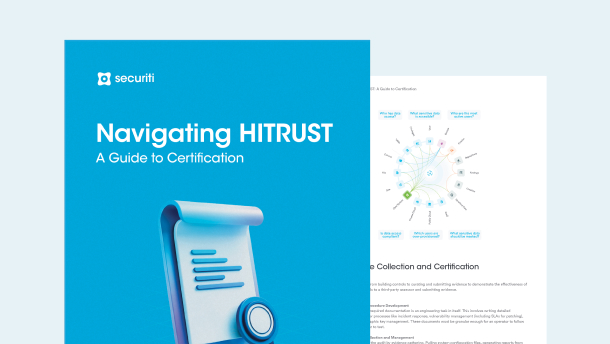
Navigating HITRUST: A Guide to Certification
Securiti's eBook is a practical guide to HITRUST certification, covering everything from choosing i1 vs r2 and scope systems to managing CAPs & planning...
What's
New