Texas’s Data Privacy and Security Act (TDPSA)

Last Updated on June 25, 2024

Schedule Your
Personal Demo

Learn how you can leverage Securiti’s DataAI Command Platform to address data security, privacy, governance, and compliance.

See a demo
Schedule your demo today

Texas’s Data Privacy and Security Act (TDPSA) was enacted on 18 June 2023 and is expected to come into effect on 1 July 2024. Thus, Texas officially became the 11th state in the US to have a comprehensive regulation on data privacy.

The TDPSA contains all the necessary provisions to ensure all consumers and their personal data are afforded appropriate protection while also being flexible enough for businesses to continue their operations without a major overhaul of their data management practices being necessary.

The law applies to all entities that conduct business in Texas or produce products or services specifically catering to Texas residents, engage in the sale of personal data. The law does not apply to small businesses as defined by the United States Small Business Administration unless you engage in the sale of sensitive data without the consent of the consumer. Key obligations for organizations subject to the TDPSA include data minimization, protection for sensitive data, transparent privacy notice, and thorough and regular data protection assessments.


The Solution

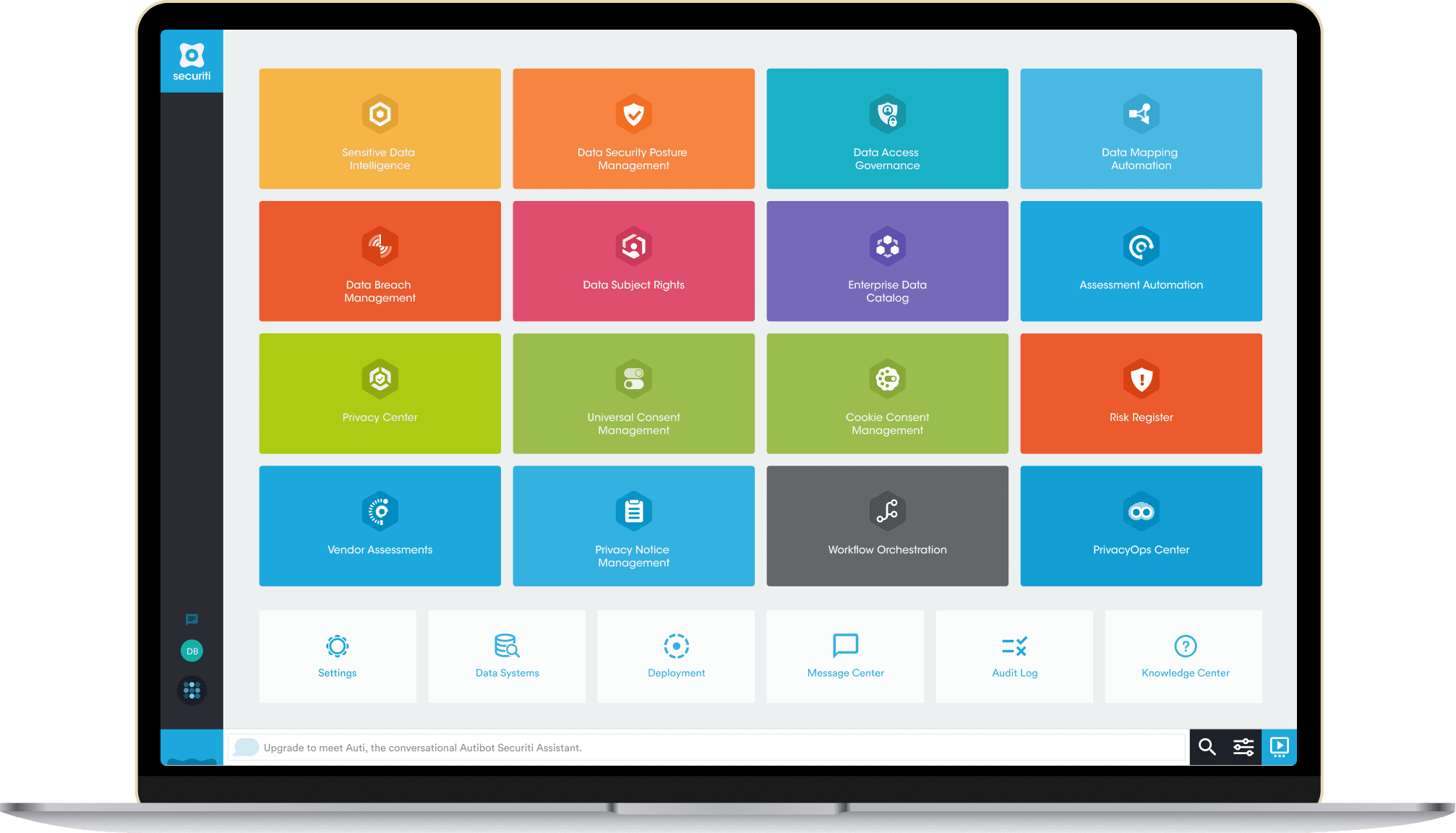
Securiti empowers organizations to ensure compliance with each provision of Texas’ Data Privacy and Security Act (TDPSA) with its plethora of products, which include, but are not limited to, AI-driven data discovery, DSR automation, universal consent management, autonomous documented accountability, data breach management, and vendor risk assessment.
Each of the solutions mentioned above is backed up by state-of-the-art artificial intelligence and machine-learning-based algorithms, making Securiti a market leader in providing data compliance and governance solutions.

Panama’s PDPL Solutiion

Request a demo today to learn how Securiti can help you and your organization comply with Texas’ TDPSA.


Readiness Assessment

TDPSA Provisions

Automate regular internal assessments of various internal data-related activities and mechanisms to evaluate their effectiveness and make appropriate adjustments with our collaborative, multi-regulation, readiness assessment system per TDPSA requirements.

 Readiness securiti
Texas

Auto Compliance Management

TDPSA Provisions

Automate compliance with TDPSA using Securiti common controls and tests.

Privacy Notice Management

Section(s): 541.102

Automate the generation and regular refresh of a privacy policy that adequately informs the users about your organization's data processing practices while being fully compliant with all applicable provisions of law with pre-built templates in compliance with the TDPSA.

Privacy Notice Management
Universal Consent Management

Universal Consent Management

Section(s): 541.005, 541.101(b)(1), 541.101(b)(4), 541.107

Ensure compliance with the TDPSA’s consent-related provisions across all major data processing activities by monitoring users' consent status via a central dashboard. Doing so allows organizations to prevent any processing or potential transfer, sharing, or selling of data to third parties unless explicitly consented to by the users.

Cookie Consent Management

Section(s): 541.051(b)(5), 541.101(b)(1), 541.101(b)(4), 541.103, 541.107

Automate your organization's entire cookie consent management to ensure all cookies used across the data infrastructure comply with the legal requirements. Additionally, scan your website to classify cookies, deploy customized consent collection points, and link consent to individual users.

Cookie Consent
Panama Automate People Data Graph securiti

Sensitive Data Intelligence

Section(s): 541.001(3), 541.001(12), 541.001(14), 541.001(19), 541.001(21), 541.001(25), 541.001(26), 541.001(27), 541.001(29)

Leverage dedicated data mapping, classification, and cataloging modules to ensure you gain real-time insights related to your organization’s entire personal and sensitive data infrastructure via visualization of data sprawl.

Data Mapping Automation

Section(s): 541.052(f)(1), 541.101, 541.103, 541.104

Trace, classify & label data within your organization's data infrastructure to ensure appropriate security controls are enabled on the most sensitive data in your organization. Leverage the same module to identify sensitive files such as consent forms and financial statements and record them under appropriate categories.

Data mapping
DSR

Data Subject Rights Fulfillments

Section(s): 541.051, 541.052, 541.053, 541.054, 541.055

Automate the entire process related to fulfilling consumer data rights-related requests with customized web forms and DSR request verification to gain real-time updates on the status of each request via the central dashboard.

Data Breach Management

Section(s): 541.104(a)(2)

Track, manage, and mitigate potential data security incidents while automating data breach response notifications to all affected stakeholders as soon as legally obliged by leveraging a knowledge database on security incident diagnosis and response per global regulatory requirements.

Panama Assess Data Protection Measures securiti
Panama Automate Records of Processing Activities securiti

Data Protection Assessment Automation

​​Section(s): 541.105(a)

Automate data protection assessments (DPAs) by leveraging pre-built compliance templates, review responses, track each assessments’ individual progress in real time, and share assessments’ insights and results with third parties.

Vendor Assessments

Section(s): 541.104

Track all the organization's third-party vendors' relevant data processing activities in real-time to ensure their data processing practices related to shared data comply with the relevant regulatory requirements.

Vendor Management
Data Security Posture

Data Security Posture Management

Section(s): 541.101(a)(2)

Gain comprehensive visibility into potential misconfigurations in data assets across public clouds, data clouds, SaaS, and on-premises environments, in addition to contextual data insights, including people ownership, regulatory obligations, and security and privacy metadata.

Key Rights Under Texas’ TDPSA

Like most data privacy regulations, Texas’ TDPSA empowers all users with the following consumer data rights:

Right to Access

Right to Access

Consumers have the right to confirm whether a controller is processing their personal data and to access that data subsequently.


Right to Correction

Right to Correction

Consumers have the right to correct any inaccuracies in their personal data, regardless of the nature of the data and the purpose for which it was collected.


Right to Deletion

Right to Deletion

Consumers have the right to request any collected personal data be deleted.


Right to Portability

Right to Portability

Consumers have the right to request a copy of their personal data provided in a portable and readily usable format that can be transmitted to another controller without any issues.


Right to Opt-Out of Processing

Right to Opt-Out of Processing

Consumers have the right to opt out of the processing of their data altogether if the processing is for the following purposes:

  • Targeted advertising;
  • Sale of personal data;
  • Profiling for purposes of a decision that produces a legal consequence for the consumer.

Facts Related to Texas’ TDPSA

Here are some important facts related to Texas’s Data Privacy and Security Act (TDPSA):

1

Organizations must gain explicit consent to process sensitive personal data, which includes data like genetic, biometric, and precise geolocation data, among others;

2

The Texas Attorney General’s office has the exclusive regulatory authority to enforce the TDPSA;

3

Any entity found in violation of the TDPSA is liable for a civil penalty amount not exceeding $7,500 for each violation;

4

The TDPSA does not provide a basis for a private right of action for a violation of any of its provisions;

5

The TDPSA comes into effect on 1 July 2024, allowing subject organizations ample time to ensure compliance.

Analyze this article with AI

Prompts open in third-party AI tools.
IDC MarketScape

Securiti named a Leader in the IDC MarketScape for Data Privacy Compliance Software

Read the Report
Videos
View More
Rehan Jalil, Veeam on Agent Commander : theCUBE + NYSE Wired: Cyber Security Leaders
Following Veeam’s acquisition of Securiti, the launch of Agent Commander marks an important step toward helping enterprises adopt AI agents with greater confidence. In...
View More
Mitigating OWASP Top 10 for LLM Applications 2025
Generative AI (GenAI) has transformed how enterprises operate, scale, and grow. There’s an AI application for every purpose, from increasing employee productivity to streamlining...
View More
Top 6 DSPM Use Cases
With the advent of Generative AI (GenAI), data has become more dynamic. New data is generated faster than ever, transmitted to various systems, applications,...
View More
Colorado Privacy Act (CPA)
What is the Colorado Privacy Act? The CPA is a comprehensive privacy law signed on July 7, 2021. It established new standards for personal...
View More
Securiti for Copilot in SaaS
Accelerate Copilot Adoption Securely & Confidently Organizations are eager to adopt Microsoft 365 Copilot for increased productivity and efficiency. However, security concerns like data...
View More
Top 10 Considerations for Safely Using Unstructured Data with GenAI
A staggering 90% of an organization's data is unstructured. This data is rapidly being used to fuel GenAI applications like chatbots and AI search....
View More
Gencore AI: Building Safe, Enterprise-grade AI Systems in Minutes
As enterprises adopt generative AI, data and AI teams face numerous hurdles: securely connecting unstructured and structured data sources, maintaining proper controls and governance,...
View More
Navigating CPRA: Key Insights for Businesses
What is CPRA? The California Privacy Rights Act (CPRA) is California's state legislation aimed at protecting residents' digital privacy. It became effective on January...
View More
Navigating the Shift: Transitioning to PCI DSS v4.0
What is PCI DSS? PCI DSS (Payment Card Industry Data Security Standard) is a set of security standards to ensure safe processing, storage, and...
View More
Securing Data+AI : Playbook for Trust, Risk, and Security Management (TRiSM)
AI's growing security risks have 48% of global CISOs alarmed. Join this keynote to learn about a practical playbook for enabling AI Trust, Risk,...

Spotlight Talks

Spotlight 00:00
AI Agents Unleashed? The Future of Identity & Data Access Security
Watch Now View
Spotlight 00:00
IDC Research: Why Data, AI, Identity and Access Security Must Come Together
Watch Now View
Spotlight 59:11
Data Controls for AI: Findings from the 2026 GigaOm DSPM Research
Watch Now View
Spotlight 1:02:06
Consent by proxy: When AI agents start deciding for us
Watch Now View
Spotlight 1:00:41
Future-Proofing for the Privacy Professional
Watch Now View
Spotlight 50:52
From Data to Deployment: Safeguarding Enterprise AI with Security and Governance
Watch Now View
Spotlight 11:29
Not Hype — Dye & Durham’s Analytics Head Shows What AI at Work Really Looks Like
Watch Now View
Spotlight 11:18
Rewiring Real Estate Finance — How Walker & Dunlop Is Giving Its $135B Portfolio a Data-First Refresh
Watch Now View
Spotlight
Choosing the Right DSPM: An Industry Analyst’s Perspective
Watch Now View
Spotlight 13:38
Accelerating Miracles — How Sanofi is Embedding AI to Significantly Reduce Drug Development Timelines
Sanofi Thumbnail
Watch Now View
Latest
KSA PDPL in 2026 View More
KSA PDPL in 2026: What Organizations Need to Know Now
KSA's Personal Data Protection Law (PDPL) has been fully enforceable since 14th September 2024. Over the past two years, organizations have been navigating overlapping...
EU Digital Sovereignty View More
EU Digital Sovereignty is Moving from Policy to Procurement: What Organizations Need to Know
Digital sovereignty in Europe is moving from policy ambition toward something much more concrete: a framework that can determine how cloud services are assessed,...
View More
What Is Unstructured Data Discovery? A Practical Guide
Unstructured data discovery finds sensitive data in files, chats, and cloud storage. Securiti explains how it works, common challenges, and best practices.
Data Anonymization View More
What Is Data Anonymization
What is data anonymization? Securiti’s latest blog explains how it works, key techniques, and how it differs from pseudonymization. Read to learn more.
Saudi PDPL Compliance Toolkit View More
Saudi PDPL Compliance Toolkit
Turn Saudi PDPL requirements into action with practical checklists, a maturity self-assessment, and a 90-day plan for privacy and compliance leaders.
From Compliance to Continuous Assurance View More
From Compliance to Continuous Assurance: The Next Era of Saudi Data Protection
PDPL compliance didn’t end with the deadline. Learn how to comply with SDAIA enforcement requirements, govern cross-border transfers, and prepare your data for AI.
Data Minimization, Data Minimization for AI, Safe AI, AI Readiness, ROT Data, AI Governance, Data Governance, Data and AI Security, AI Risk Management, Sensitive Data View More
Minimize Before You Scale
Discover why redundant, obsolete, and trivial (ROT) data raises AI-era risks and how to minimize them. Explore practical fixes and business outcomes.
The PDPL Operational Lifecycle View More
The PDPL Operational Lifecycle
Find it. Fix it. Prove it. Repeat. Explore the 10-stage PDPL operational lifecycle, key deadlines, and the evidence regulators expect.
View More
Take the Data Risk Out of AI
Learn how to prepare enterprise data for safe Gemini Enterprise adoption with upstream governance, sensitive data discovery, and pre-index policy controls.
View More
Navigating HITRUST: A Guide to Certification
Securiti's eBook is a practical guide to HITRUST certification, covering everything from choosing i1 vs r2 and scope systems to managing CAPs & planning...
What's
New