Navigating the Evolving Data Security Landscape: Why Detection Alone Isn’t Enough

Author

Deepak Seth

Senior Solution Architect - ANZ

Listen to the content

This post is also available in: Arabic

Proactive vs. Reactive: Why Threat Detection Alone Falls Short in Data Protection

In an era where digital transformation and AI adoption are accelerating at unprecedented rates, data is becoming the lifeblood of modern organizations. As enterprises rush to integrate AI into their products and services, the proliferation of unstructured data has introduced complex challenges, particularly in securing and managing sensitive assets.

A growing reliance on threat detection over threat prevention, coupled with a lack of visibility into unstructured data, is creating significant risks for organizations. Without a clear strategy to identify and protect sensitive data, breaches can lead to severe financial penalties, regulatory non-compliance, and reputational damage. This blog explores these challenges and presents actionable solutions, including Data Security Posture Management (DSPM), to enable organizations to gain control of their data security.

The Problem: Shifting from Prevention to Detection

Organizations are increasingly focusing their security strategies on detecting threats after they occur rather than implementing measures to prevent them in the first place. While threat detection tools are essential, relying solely on them is insufficient to manage data risks effectively. Cyber attackers are constantly evolving their methods, exploiting gaps in security postures where preventive controls are weak or absent. By the time threats are detected, critical damage may have already occurred, particularly when sensitive data is compromised.

When it comes to data risks, a preventative approach is critical. This involves ensuring organizations identify and reduce redundant copies of sensitive data across the environment, proactively remediate vulnerabilities by applying appropriate security controls and retain only relevant sensitive data in assets with a healthy security posture, and ensure that access is restricted to individuals who genuinely need it. By taking these proactive steps, organizations can reduce the attack surface for sensitive data, minimize compliance risks, and build a strong foundation for managing data security.

The Unstructured Data Dilemma

The rapid adoption of AI has driven innovation but has also triggered a surge in unstructured data—files, emails, chat logs, videos, and more—spreading across organizational environments. This uncontrolled data sprawl creates a myriad of challenges:

  • Hidden Sensitive Data: Critical assets containing personally identifiable information (PII), intellectual property, and other sensitive data often go unnoticed.
  • Lack of Governance: Without proper classification and oversight, organizations struggle to manage and protect unstructured data effectively.
  • Compliance Risks: Regulatory mandates (e.g., AU PA, GDPR, CCPA) require organizations to know where sensitive data resides and who has access to it. Unstructured data creates blind spots that increase the risk of non-compliance.

The urgency to address these challenges becomes even more evident during a cyber breach. Without visibility into their "crown jewels"—the most sensitive and valuable data assets—organizations are left scrambling to assess damage, risking hefty fines and reputational loss.

Cyber Breaches: When Unstructured Data Becomes a Liability

During a security incident, time is of the essence. Yet, many organizations lack the ability to:

  • Identify where sensitive data resides across their environments.
  • Determine who has access to that data.
  • Assess whether it’s stored in vulnerable assets that attackers can exploit.

This lack of visibility into unstructured data significantly delays breach response efforts, increasing the scope and impact of the incident. For CISOs and CDOs, the inability to locate and protect sensitive data creates severe financial, operational, and reputational consequences.

The Solution: Data Security Posture Management (DSPM)

To address these challenges, organizations need a proactive solution that provides visibility, control, and security for sensitive data—both structured and unstructured. This is where Data Security Posture Management (DSPM) comes into play.

DSPM solutions enable organizations to:

1. Discover Shadow and Native Data Assets

A significant feature of DSPM solutions is their ability to uncover shadow data—unknown or unmanaged data assets that may exist within the organization without their knowledge. By identifying these hidden assets, DSPM tools help organizations mitigate risks associated with unmonitored and potentially vulnerable data.

2. Detect Sensitive Data Across the Organization

DSPM solutions automatically discover and classify sensitive data across all data environments, including cloud storage, databases, file systems, and collaboration tools. This eliminates blind spots and ensures that no sensitive asset goes unnoticed.

3. Correlate Data with Access Controls

It’s not enough to just know where sensitive data resides—organizations must also understand who has access to it. DSPM tools correlate data location with access permissions, ensuring that only authorized individuals can view or interact with critical assets.

4. Assess Security Exposure

DSPM solutions evaluate the security posture of assets where sensitive data resides, identifying:

  • Misconfigurations that could expose data to attackers.
  • Weak security controls that leave data vulnerable.
  • Public exposure risks where sensitive data is unintentionally accessible.

By integrating DSPM into their data security strategy, organizations can:

One of the largest utility providers in Australia has successfully leveraged DSPM solutions to gain visibility into their sensitive data across their On-prem, Cloud and SaaS environments. By automatically cataloging unstructured and structured data across their organization, the DSPM solution has also helped them create a comprehensive data catalog. This catalog not only enhances data visibility but also empowers business stakeholders with actionable insights, ensuring better data governance and operational efficiency.


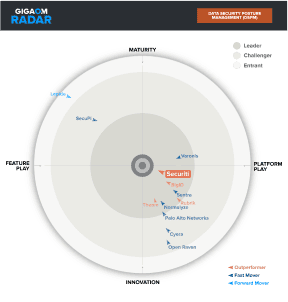
Securiti Tops DSPM Ratings

Securiti’s DataAI Command Platform dominates GigaOm’s DSPM Evaluation with highest ratings for key capabilities, #emerging capabilities, and business criteria.

Securiti Tops DSPM Ratings

Conclusion: Taking Proactive Control of Data Security

As organizations navigate the complexities of AI-driven innovation and unstructured data growth, the risks associated with unmanaged sensitive data cannot be ignored. Focusing solely on threat detection is no longer sufficient—proactive measures like DSPM are essential to identify, protect, and secure critical assets.

Analyze this article with AI

Prompts open in third-party AI tools.
Join Our Newsletter

Get all the latest information, law updates and more delivered to your inbox


More Stories that May Interest You
Videos
View More
Rehan Jalil, Veeam on Agent Commander : theCUBE + NYSE Wired: Cyber Security Leaders
Following Veeam’s acquisition of Securiti, the launch of Agent Commander marks an important step toward helping enterprises adopt AI agents with greater confidence. In...
View More
Mitigating OWASP Top 10 for LLM Applications 2025
Generative AI (GenAI) has transformed how enterprises operate, scale, and grow. There’s an AI application for every purpose, from increasing employee productivity to streamlining...
View More
Top 6 DSPM Use Cases
With the advent of Generative AI (GenAI), data has become more dynamic. New data is generated faster than ever, transmitted to various systems, applications,...
View More
Colorado Privacy Act (CPA)
What is the Colorado Privacy Act? The CPA is a comprehensive privacy law signed on July 7, 2021. It established new standards for personal...
View More
Securiti for Copilot in SaaS
Accelerate Copilot Adoption Securely & Confidently Organizations are eager to adopt Microsoft 365 Copilot for increased productivity and efficiency. However, security concerns like data...
View More
Top 10 Considerations for Safely Using Unstructured Data with GenAI
A staggering 90% of an organization's data is unstructured. This data is rapidly being used to fuel GenAI applications like chatbots and AI search....
View More
Gencore AI: Building Safe, Enterprise-grade AI Systems in Minutes
As enterprises adopt generative AI, data and AI teams face numerous hurdles: securely connecting unstructured and structured data sources, maintaining proper controls and governance,...
View More
Navigating CPRA: Key Insights for Businesses
What is CPRA? The California Privacy Rights Act (CPRA) is California's state legislation aimed at protecting residents' digital privacy. It became effective on January...
View More
Navigating the Shift: Transitioning to PCI DSS v4.0
What is PCI DSS? PCI DSS (Payment Card Industry Data Security Standard) is a set of security standards to ensure safe processing, storage, and...

View More
Securing Data+AI : Playbook for Trust, Risk, and Security Management (TRiSM)
AI's growing security risks have 48% of global CISOs alarmed. Join this keynote to learn about a practical playbook for enabling AI Trust, Risk,...

Spotlight Talks

Spotlight 59:11
Data Controls for AI: Findings from the 2026 GigaOm DSPM Research
Watch Now View
Spotlight 1:02:06
Consent by proxy: When AI agents start deciding for us
Watch Now View
Spotlight 1:00:41
Future-Proofing for the Privacy Professional
Watch Now View
Spotlight 50:52
From Data to Deployment: Safeguarding Enterprise AI with Security and Governance
Watch Now View
Spotlight 11:29
Not Hype — Dye & Durham’s Analytics Head Shows What AI at Work Really Looks Like
Watch Now View
Spotlight 11:18
Rewiring Real Estate Finance — How Walker & Dunlop Is Giving Its $135B Portfolio a Data-First Refresh
Watch Now View
Spotlight
Choosing the Right DSPM: An Industry Analyst’s Perspective
Watch Now View
Spotlight 13:38
Accelerating Miracles — How Sanofi is Embedding AI to Significantly Reduce Drug Development Timelines
Sanofi Thumbnail
Watch Now View
Spotlight 10:35
There’s Been a Material Shift in the Data Center of Gravity
Watch Now View
Spotlight 14:21
AI Governance Is Much More than Technology Risk Mitigation
Watch Now View
Latest
Australia’s Office of AI: Why Annual Audits Miss What Your AI Can Reach View More
Australia’s Office of AI: Why Annual Audits Miss What Your AI Can Reach
Picture this: a fictional but entirely plausible scenario. An Australian financial institution's AI systems spend six months accessing a customer data repository nobody has...
View More
A Complete DSPM Needs Classification and Context
Classification is one of the core functions a DSPM program handles, and it usually runs in tandem with discovery, since together they form the...
The EU Cyber Resilience Act (CRA): A Complete Guide for Compliance View More
The EU Cyber Resilience Act (CRA): A Complete Guide for Compliance
Here’s what you need to know about the EU’s Cyber Resilience Act (CRA), including the best solutions to aid your compliance efforts. Read on...
What is Access Control? Definition, Types, & Components View More
What is Access Control? Definition, Types, & Components
Discover what access control is, how it works, types, components, importance in ensuring regulatory compliance, and much more.
Stop Storing Risk: An Executive's Guide to ROT Data Minimization View More
Stop Storing Risk: An Executive’s Guide to ROT Data Minimization
An executive's guide to reducing redundant, obsolete, and trivial (ROT) data to cut storage costs, shrink your attack surface, and improve compliance.
The Context Layer for Data+AI Security View More
The Context Layer for Data+AI Security
Discover how Securiti’s DataAI Command Graph connects data, identity, cloud, and AI findings to uncover contextual risk and toxic combinations.
The Toxic Combination Problem in DataAI Risks View More
The Toxic Combination Problem in DataAI Risks
Discover how siloed security alerts create hidden toxic risk combinations and how correlated context helps reduce alert fatigue and uncover compound risks faster.
The Cloud Storage Bill Nobody Reads View More
The Cloud Storage Bill Nobody Reads
Hidden cloud storage costs add up fast. Learn how redundant, obsolete, and trivial data drives unnecessary spend, expands risk, and why automated data minimization...
View More
Take the Data Risk Out of AI
Learn how to prepare enterprise data for safe Gemini Enterprise adoption with upstream governance, sensitive data discovery, and pre-index policy controls.
View More
Navigating HITRUST: A Guide to Certification
Securiti's eBook is a practical guide to HITRUST certification, covering everything from choosing i1 vs r2 and scope systems to managing CAPs & planning...
What's
New